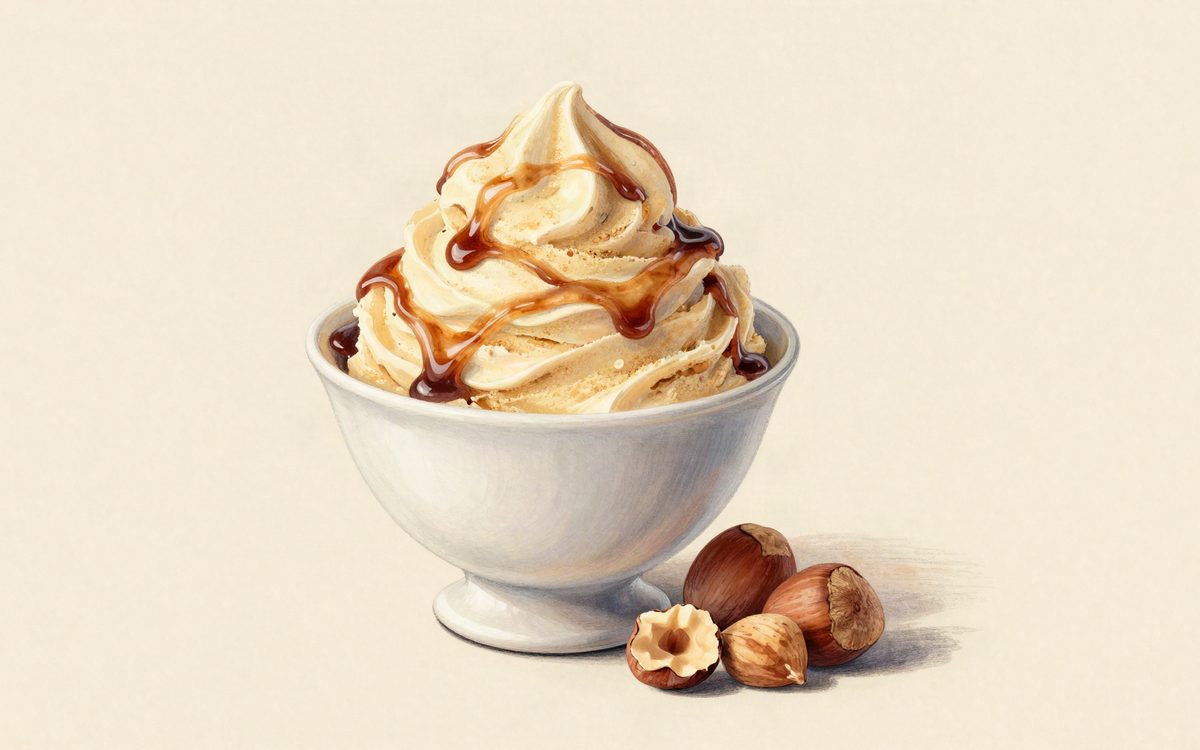
Hazelnut Variegato (Ripple Cream)
Deep roasted nut on the tongue, soft and silky even straight from the freezer, sweet without any sugar grit and with a faint salty edge at the end.
Free calculator
A variegato is the sauce you ripple through gelato: fruit, caramel, cream or a nut cream. It is not a mix to churn. Its job is to stay soft and spoonable inside the gelato at -18 °C, so it carries far less water and far more sugar than the gelato around it.
The balancer has a Variegato type with a mode of its own. Instead of the eight gelato indicators, it checks the numbers that decide whether a sauce freezes.
Free. You will be asked to sign in or create an account.
Most ripple sauces are water-based: fruit, caramel or cream, with water at 5% or more. Nut creams with almost no water follow a fat-based profile of their own.
| Total solids | 65 to 80% |
|---|---|
| Water | 20 to 35% |
| Sugars | 55 to 75% |
| Fat | 0 to 30% |
| PAC per 100 g of water | 250 to 350 |
| Brix of the water phase | 62 to 72 |
| Water | 0 to 2% |
|---|---|
| Fat | 35 to 62% |
| Sugars | 30 to 40% |
Not checked for a sauce: POD, PAC per kg, MSNF and protein. The balancer shows them as reference only.
Check by hand: A sauce to ripple through gelato, not a mix to churn: it must stay soft at -18 °C. The app cannot calculate two more targets yet, so check them yourself: 30 to 75% of the sugars as glucose or fructose (dextrose, invert sugar) and water activity around 0.78 to 0.85. Typical dose: 10 to 20% of the finished gelato.
Low confidence. Few sources publish numbers for ripple sauces: the main ones are patents, and the PAC per water threshold comes from a freezing model, not a direct measurement.
Balanced recipes of this base from the recipe collection, with grams and the full balancing panel.
Deep roasted nut on the tongue, soft and silky even straight from the freezer, sweet without any sugar grit and with a faint salty edge at the end.
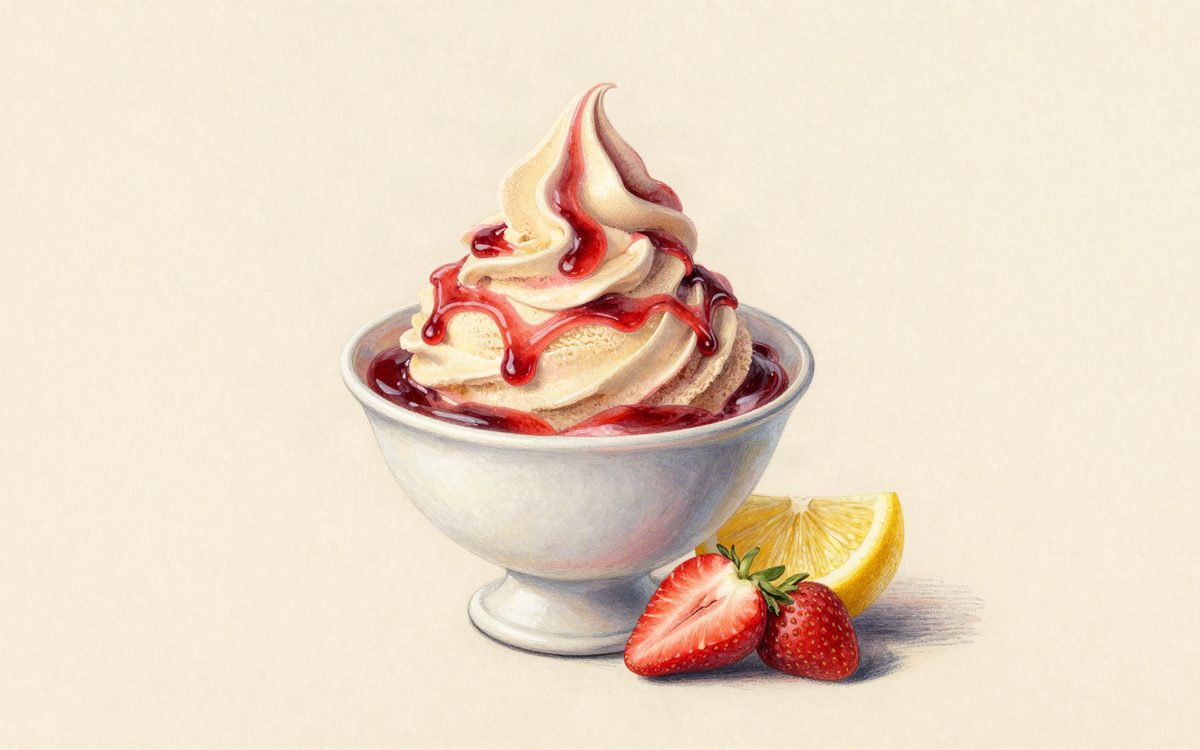
Glossy and bright red, it stays soft enough to streak through frozen gelato, sweet at first touch and then sharp with fresh berry and lemon at the finish.
The sauce has too much free water for its sugars. At -18 °C that water turns to ice when PAC per 100 g of water drops below 250. Raise it with dextrose, invert sugar or a high DE glucose syrup, or cook off some of the water.
A sauce holds far less water than a gelato mix, so PAC per kg does not compare. What matters is dividing by the water: a sauce with PAC 700 per kg and 30% water gives 233, still below the 250 to 350 target.
Creams with water below 5% and fat at 25% or more do not form ice, so PAC and Brix do not apply. The app switches to the fat-based targets: sugars 30 to 40%, fat 35 to 62% and water 0 to 2%. Their softness comes from liquid oil, which the app cannot measure yet.
The reference is 10 to 20% of the finished gelato. It comes from a patent on toppings layered in a cup, so treat it as a starting point for a ripple.
Open the balancer with Variegato already selected. The app is free: create an account and start balancing.
Open the variegato balancerThe ranges of every base in one table, with the sources behind each one, a CSV download and a citation block.