Yogurt Gelato
The tang lands first and does not let go: lean on the tongue, cold, lifted at the front by citrus and long on lactic sourness at the end.
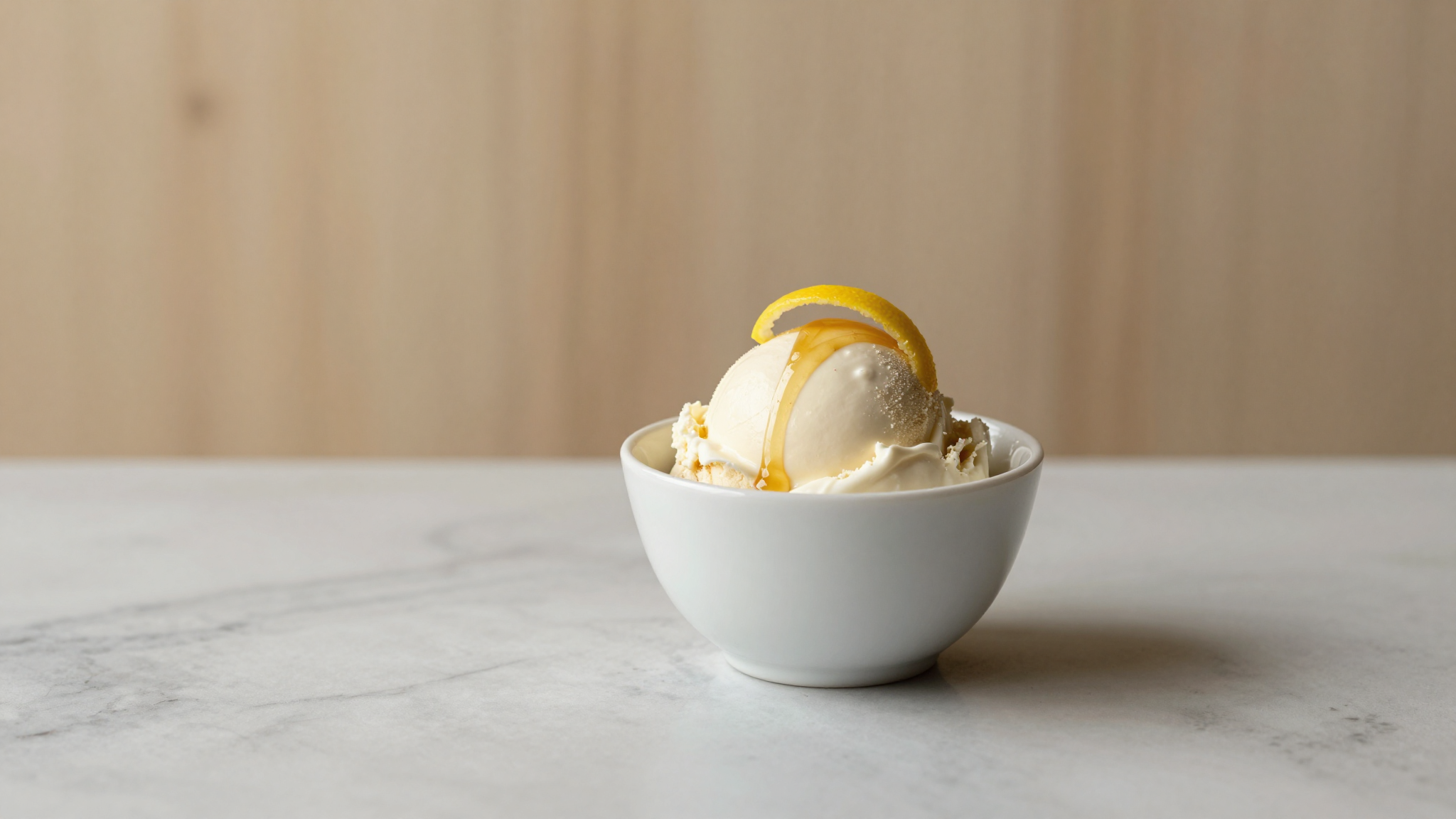
Where does this one usually break down at home? In the pan. Yogurt heated with the rest of the mix splits, and even when it holds together, pasteurisation flattens the fresh lactic note the whole flavour depends on, leaving something sweet and vaguely dairy. So the base is built and chilled first, sugars, cream, milk powder and carob, and the 437 g of yogurt per kilo goes in cold, immediately before churning. The 5 g of lemon juice works the same problem from the other side: citric acidity is quicker and cleaner on the palate than lactic, and it gives the front of the spoon a lift the cold would otherwise dull.
The Greek yogurt is not there for texture theatre. It carries about 10 percent MSNF and 9 percent protein against 8.85 and 3.47 for plain whole milk yogurt, so a small amount buys structure cheaply. The result is MSNF at 9.98 inside an 8 to 12 band and protein at 3.99, dead centre of 3 to 5, with skim milk powder held to only 38 g.
Cream stops at 160 g on purpose, and fat lands at 7.74 percent, just under the 8 percent ceiling for a frozen yogurt. Fat is what cushions the acidity of whole milk yogurt: without enough of it the gelato is simply sharp, and with too much the sourness disappears and you have made fior di latte with extra steps. The 5 g of lemon juice work the other side of that balance. They are not there to taste of lemon. Citric acidity reads faster and cleaner on the palate than the lactic acidity of yogurt, and 5 g are enough to put a bright opening note on a flavour that otherwise arrives slowly.
Ingredients
Makes 1000 g of finished base.
| Ingredient | Grams | Home measure |
|---|---|---|
| Whole Milk Yogurt | 400 | 1 2/3 cups |
| Whole Milk | 176 | 2/3 cup plus 1 tablespoon |
| Heavy Cream 35% | 160 | 2/3 cup |
| Sugar (Sucrose) | 150 | 3/4 cup |
| Skim Milk Powder | 38 | 1/3 cup plus 1 tablespoon |
| Greek Yogurt | 37 | |
| Dextrose (Glucose) | 30 | 2 1/2 tablespoons |
| Lemon Juice | 5 | |
| Carob Seed Flour | 4 |
Loads these exact grams into the free balancer, ready to edit.
Method
Two stage: pasteurised base first, cold yogurt folded in after ageing
- 1Whisk every dry ingredient together first: sugars, milk powder, stabiliser and salt. Dry-blending them stops the stabiliser clumping when it meets liquid.
- 2Warm the liquids to 40 C (104 F), then rain the dry mix in while whisking hard.
- 3Heat to 82 C (180 F) and hold for 2 minutes so the stabiliser hydrates.
- 4Chill in an ice bath to under 5 C (41 F) within 2 hours. Slow cooling is where bacteria and coarse crystals both start.
- 5Age 6 to 12 hours in the fridge under 5 C (41 F). This is when the stabiliser and the milk protein take up water.
- 6Pour the cold yogurt into the aged base in a thin stream, stirring by hand. Yogurt never goes in the pan: heat kills the live cultures and curdles the milk protein. From here the mix goes to the freezer without another rest.
- 7Fold the fruit in cold, after ageing. Heating it costs you the fresh aroma and nothing is gained.
- 8Freeze in a shallow metal pan 2 to 3 cm deep, breaking the crystals with a fork every 30 to 40 minutes, 4 to 6 times.
- 9Freeze firm, then temper 10 to 15 minutes in the fridge before scooping.
The balance
All six against the professional range for Frozen Yogurt.
Protein at 3.99 and MSNF at 9.98 are the two numbers doing the structural work, and both come mostly from yogurt rather than powder. That is why skim milk powder is only 38 g: the 437 g of yogurt already deliver most of the dry milk extract, and lactose is sitting at 8.5 percent of the water phase, close enough to the sandiness threshold that adding powder for its own sake would cost texture within a week. Fat at 7.74 percent, just under the 8 percent ceiling for this base, is the cushion under the acidity, and it explains the 160 g ceiling on cream: 10 g more cream already crosses it. Sugars at 17.89 percent sit just under the middle of the 15 to 21 frozen yogurt band, deliberately, because sweetness is the other thing that masks sourness and this recipe is meant to taste of yogurt. PAC at 255.26, in the lower half of 230 to 300, still keeps it scoopable even at that sugar level, which is what the 30 g of dextrose are for.
Estimated nutrition: ~183 kcal · Fat 7.7 g · Sugars 17.9 g · Protein 4 g (per 100 g of mix, from the balanced composition).
Yogurt is never pasteurised, for two separate reasons. Heat kills the live cultures, which are half the point of the product, and yogurt sits at pH 4.2 to 4.6, right on top of the isoelectric point of casein at 4.6, where milk protein precipitates. Heating a mix that contains yogurt is a recipe for curds. So the process runs in two phases. Pasteurise only the milk, sugars, milk powder and cream at 85 C, chill below 8 C, age 4 to 6 hours, then fold in the cold yogurt slowly, by hand, with no high speed blender. The lemon juice goes in last, diluted, drop by drop while stirring: poured into one spot it coagulates the mix on contact. Once the yogurt is in, freeze within 2 hours. An acid mix left sitting keeps acidifying and the flavour drifts. Low overrun, around 30 percent, is what you want here so the acidity is not diluted in air, and the tray and fork method gives you that without trying.
If it goes wrong
Either the yogurt went into the pot and met heat, or the 5 g of lemon juice were poured into one spot instead of dispersed.
Keep the yogurt out of the pasteurisation entirely and add it below 8 C. Dilute the lemon juice in a spoonful of the cold base and trickle it in while stirring.
The yogurt dose fell below the 400 g floor, or cream went over the 160 g ceiling and buried the acidity in fat.
Hold 400 g of whole milk yogurt and 160 g of cream. Below 400 g you are no longer making allo yogurt, you are making fior di latte with yogurt in it.
The finished mix, yogurt already in, was left to rest overnight. Live cultures keep working in the fridge and the pH keeps dropping.
Do the 4 to 6 hour ageing before the yogurt goes in, not after. Once it is in, freeze within 2 hours.
Suitable for: Vegetarian, Egg-free
Allergens: milk
No ingredient in this recipe contains gluten.
- https://www.dolcesalato.com/2017/05/22/yogurt-gelato-del-benessere/
- https://www.scaldaferro.it/il-vero-gelato-allo-yoghurt-come-riconoscerlo/?lang=en
- https://qfrozen.it/larte-della-mantecatura-come-ottenere-lo-yogurt-soft-perfetto-tra-acidita-e-dolcezza/
- The science behind it: Gelato vs Frozen Yogurt
- Ingredient sheet: Whole Milk Yogurt
- The story of this recipe: Yogurt Gelato Recipe
Want to change an ingredient and watch the numbers move? Open the free balancer