White Chocolate Raspberry Gelato
Sweetness comes first, then berry acid cuts across it, and the finish runs long and creamy with a tart edge that keeps it from cloying.
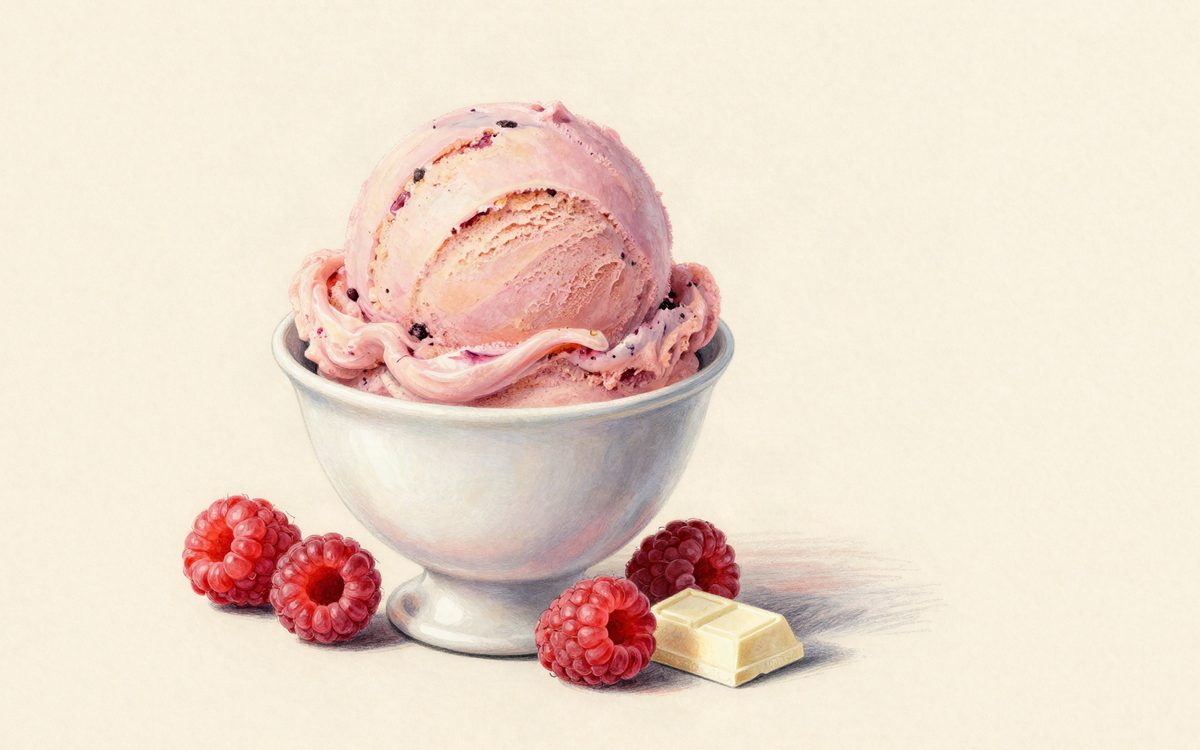
The label on the bar settles this one before anything is weighed. If the fat listed is anything other than cocoa butter, put it back, because the cheap white bars use palm or other vegetable fat and it shows up as a waxy film the palate cannot clear. A proper bar is cocoa butter, sugar and milk solids, which in balancing terms means the 150 g here already bring roughly 9 percent sugar, 5 percent fat and 2.5 percent MSNF before anything else goes on the scale, so the free sugar line stays short at 75 g. The raspberry, also at 150 g, is the only thing pushing back, and it wants ripe fruit or an unsweetened puree.
That is why the sugar bowl is nearly empty. Sucrose stops at 75 g and dextrose at 30 g, and total sugars still close at 19.83 percent inside a 17 to 25 band. Fat lands at 6.94 percent inside 3.5 to 8, and most of it came from the bar, not from cream, because there is no cream here at all: 578 g of whole milk carries the rest. Non-fat dry milk is held to 14 g for the same reason, since MSNF already reads 9.02 against a 9.5 ceiling.
Raspberry at 150 g is the counterweight, and it has to be generous. A dark chocolate version can lean on tannin and bitterness to cut sweetness. This one has neither, so fruit acidity is the only brake available. POD finishes at 187.13, mid band in 150 to 230, and that headroom is what keeps a bar this sweet from reading as candy.
Ingredients
Makes 1000 g of finished base.
| Ingredient | Grams | Home measure |
|---|---|---|
| Whole Milk | 578 | 2 1/3 cups |
| White Chocolate | 150 | |
| Raspberry | 150 | |
| Sugar (Sucrose) | 75 | 1/3 cup plus 1 tablespoon |
| Dextrose (Glucose) | 30 | 2 1/2 tablespoons |
| Non-Fat Dry Milk | 14 | 2 1/2 tablespoons |
| Stabilizer (Neutral) | 3 |
Loads these exact grams into the free balancer, ready to edit.
Method
Chilled steel tray, forked, chocolate emulsified into the warm base
- 1Whisk every dry ingredient together first: sugars, milk powder, stabiliser and salt. Dry-blending them stops the stabiliser clumping when it meets liquid.
- 2Warm the liquids to 40 C (104 F), then rain the dry mix in while whisking hard.
- 3Heat to 82 C (180 F) and hold for 2 minutes so the stabiliser hydrates.
- 4Melt the chocolate to 45 C (113 F) and stir it into the hot base off the heat, then blend 60 seconds until glossy.
- 5Chill in an ice bath to under 5 C (41 F) within 2 hours. Slow cooling is where bacteria and coarse crystals both start.
- 6Age 6 to 12 hours in the fridge under 5 C (41 F). This is when the stabiliser and the milk protein take up water.
- 7Fold the fruit in cold, after ageing. Heating it costs you the fresh aroma and nothing is gained.
- 8Freeze in a shallow metal pan 2 to 3 cm deep, breaking the crystals with a fork every 30 to 40 minutes, 4 to 6 times.
- 9Freeze firm, then temper 10 to 15 minutes in the fridge before scooping.
The balance
All six against the professional range for Milk Gelato with Fruit.
Two numbers shape this sheet. MSNF at 9.02 against a limit of 9.5 is why the milk powder stops at 14 g: the white chocolate is already handing over about 2.5 percent of it, and there is no room to add more without pushing the base toward a chalky, over-proteined mouthfeel. Sugars at 19.83 percent inside 17 to 25 explain the small 75 g of sucrose, since roughly 8.9 percent of that total arrived inside the bar. Around those two, fat at 6.94 percent sits high in 3.5 to 8, which is generous for a recipe with no cream, and PAC at 264.8 lands in the lower half of 240 to 310, firm enough to hold a scoop but soft enough to serve once it has rested briefly in the fridge. Lactose is 7.68 percent of the water phase, below the line where it crystallises and turns sandy, which is the other reason the milk powder was kept small.
Estimated nutrition: ~179 kcal · Fat 6.9 g · Sugars 19.8 g · Protein 3.5 g (per 100 g of mix, from the balanced composition).
Cocoa butter is fragile and this bar also carries its own milk solids, so the melting window is narrow. Take the pasteurised base off the heat at 80 to 82 C and melt the white chocolate into it there, never above 85 C. Past that point the milk solids inside the bar start to caramelise and you get a cooked milk note that runs straight over the fresh fruit. Then blend with a stick blender for 30 to 60 seconds. Without that the cocoa butter coalesces during freezing and the spoon comes out greasy. The raspberry goes in cold and after ageing, and the curdling risk is higher here than in a dark chocolate version because the white bar contributes more MSNF and therefore more exposed casein for the fruit acid to find. If you want a marbled look, hold back 30 g of the 150 g of raspberry as a variegate instead of blending all of it in. One storage note: high fat plus high sugar leaves this base soft, so keep it at -13 C rather than -11 C.
If it goes wrong
The cocoa butter was stirred in but never emulsified. 150 g of white chocolate at 32 percent fat is a lot of fat entering as a single lump.
Blend 30 to 60 seconds with a stick blender while the base is still warm, right after the chocolate melts in. Once it has been chilled the fat will not break down properly any more.
The chocolate was melted over direct heat, or stirred into a base still above 85 C, and the milk solids inside the bar caramelised.
Melt it off the heat into a base at 80 to 82 C. There is no recovery once it has happened, the note stays through ageing and freezing.
The raspberry met a warm base. Fruit acid plus 9.02 percent MSNF worth of exposed casein is a fast way to curdle a mix.
Age the base first, then fold the 150 g of raspberry in cold, at the end. If you want it smooth rather than seedy, sieve the fruit before weighing.
Suitable for: Vegetarian, Egg-free
Allergens: milk
- https://www.gavinpublishers.com/article/view/functional-gelato-how-to-reduce-the-excessive-amount-of-added-sugars-while-still-maintaining--the-perfect-taste
- https://icecreamcalc.com/2021/07/06/ingredient-tutorial/
- https://www.dreamscoops.com/ice-cream-science/ice-cream-calculator/
- https://www.dairyfoods.com/articles/90396-working-with-cocoa-in-ice-cream
- The science behind it: White Chocolate Couverture for Gelato
- Ingredient sheet: White Chocolate
Want to change an ingredient and watch the numbers move? Open the free balancer