Vietnamese Coffee Gelato
Built on condensed milk instead of sugar, it reads bitter and sweet at once, thick and slow to melt, and the roast keeps going after the sweetness settles.
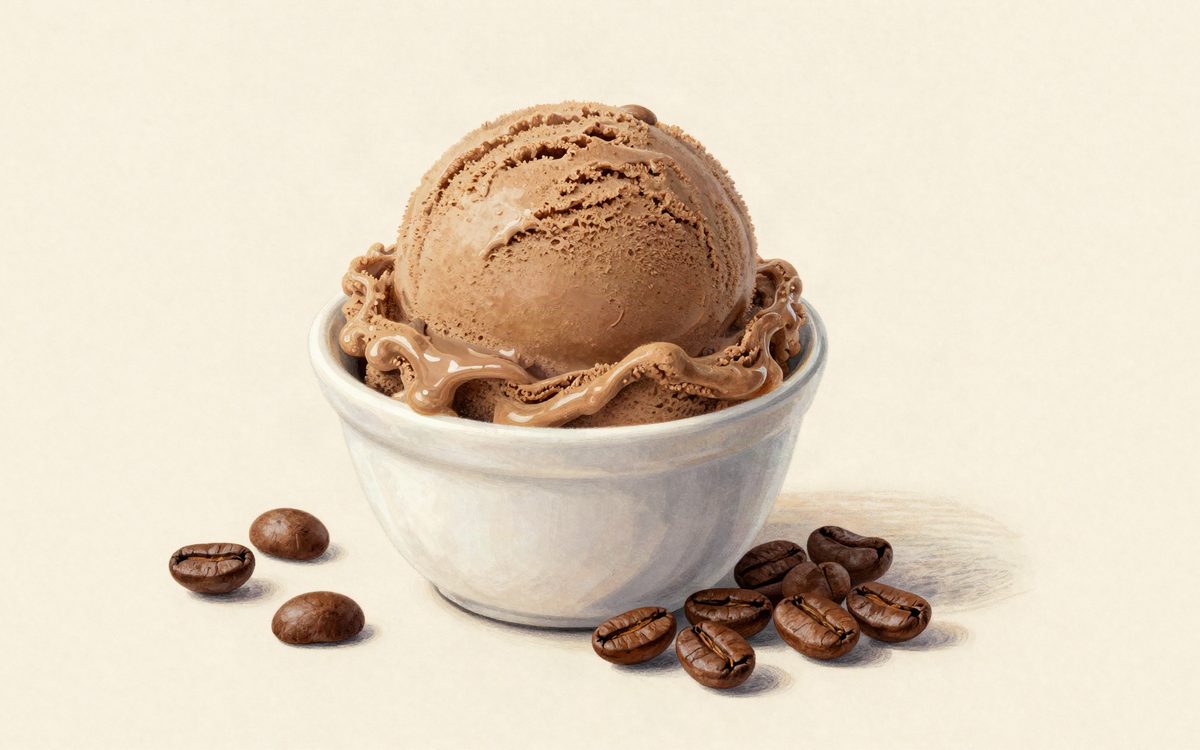
Nothing on the shopping list rewrites this sheet like the condensed milk. Read the tin: it should say sweetened condensed milk and list milk and sugar, because the cheaper filled versions swap milk fat for vegetable fat and lose the cooked, caramel note the whole thing leans on. On the coffee, a dark robusta gives the flat bitterness and the body this is built around, where a bright arabica reads thin and sour once frozen. At 140 g per kilo the tin delivers sugar, fat and milk solids in one move, so free sucrose falls to 95 g, with 120 g of espresso and 8 g of instant coffee carrying the roast without flooding the mix with water.
Condensed milk is not simply sugar. It arrives carrying 44 percent sugar, 20 percent MSNF and 8.7 percent fat all in one move, and that is why it rewrites the balance instead of seasoning it. Free sucrose lands at 95 g and dextrose at only 20 g, and sugars still close at 17.54 percent in a 16 to 22 band. The MSNF it brings is also why skim milk powder is held to 27 g: MSNF closes at 10.21 percent against an 11.5 percent ceiling.
The result is deliberately sweeter and more milky than a plain coffee gelato, which is the whole point. Fat is modest at 7.13 percent, protein sits at 4.02 percent, and PAC 253.75 in a 220 to 300 band keeps it scoopable. Lactose is the number to keep an eye on: 5.56 percent of the mass and 8.86 percent of the water, from three dairy sources stacked on top of one another.
Ingredients
Makes 1000 g of finished base.
| Ingredient | Grams | Home measure |
|---|---|---|
| Whole Milk | 465 | 2 cups |
| Condensed Milk | 140 | |
| Espresso (Rich) | 120 | |
| Heavy Cream 35% | 120 | 1/2 cup |
| Sugar (Sucrose) | 95 | 1/3 cup plus 2 tablespoons |
| Skim Milk Powder | 27 | 1/4 cup plus 1 tablespoon |
| Dextrose (Glucose) | 20 | 1 1/2 tablespoons |
| Instant Coffee | 8 | |
| Carob Seed Flour | 4 | |
| Salt | 1 |
Loads these exact grams into the free balancer, ready to edit.
Method
Dark roast brewed slow, condensed milk stirred in under 60 C, coffee added cold, tray frozen and forked
- 1Whisk every dry ingredient together first: sugars, milk powder, stabiliser and salt. Dry-blending them stops the stabiliser clumping when it meets liquid.
- 2Warm the liquids to 40 C (104 F), then rain the dry mix in while whisking hard.
- 3Heat to 82 C (180 F) and hold for 2 minutes so the stabiliser hydrates.
- 4Chill in an ice bath to under 5 C (41 F) within 2 hours. Slow cooling is where bacteria and coarse crystals both start.
- 5Age 6 to 12 hours in the fridge under 5 C (41 F). This is when the stabiliser and the milk protein take up water.
- 6Freeze in a shallow metal pan 2 to 3 cm deep, breaking the crystals with a fork every 30 to 40 minutes, 4 to 6 times.
- 7Freeze firm, then temper 10 to 15 minutes in the fridge before scooping.
The balance
All six against the professional range for Milk Gelato.
Two numbers explain why this sheet looks nothing like a plain coffee gelato. Sugars at 17.54 percent are mostly delivered by the 140 g of condensed milk, which is 44 percent sugar by itself, and that is why free sucrose only needs 95 g and dextrose only 20 g. MSNF at 10.21 percent in an 8 to 11.5 band is the other constraint: the condensed milk brings roughly 20 percent MSNF of its own, so skim milk powder is capped at 27 g rather than the larger dose a milk base would normally carry. Everything else follows. Fat stays low in band at 7.13 percent because sweetness and milk solids are already doing work that fat usually does, and PAC 253.75 sits mid band so a very sweet mix still firms at a workable rate in a home freezer instead of staying slushy.
Estimated nutrition: ~185 kcal · Fat 7.1 g · Sugars 17.5 g · Protein 4 g (per 100 g of mix, from the balanced composition).
Condensed milk is already concentrated and already pasteurised, and its lactose is close to saturation. Do not put it through a second long heat step over direct flame: the Maillard reaction advances, it turns into dulce de leche, and both colour and flavour change. Pasteurise the milk base first, then stir the condensed milk into it below 60 C. Use a dark, robusta style roast with a slow extraction so the body of the phin comes through; a bright, acidic espresso simply disappears behind that much sweetened milk. Because condensed milk, whole milk and milk powder stack here, lactose reaches 8.86 percent of the water, so hold MSNF at 10.21 percent rather than topping up the powder. The coffee goes in cold, always, at the end.
If it goes wrong
The condensed milk was boiled with the base. At 44 percent sugar and 20 percent MSNF it browns quickly over direct heat.
Pasteurise the milk, cream and powder first, take the pot off the heat, and stir the 140 g of condensed milk in below 60 C.
Lactose crystallising. This sheet already runs 8.86 percent lactose in the water phase, from condensed milk, whole milk and skim milk powder together.
Do not raise the 27 g of skim milk powder. If you want more dairy body, take it from the 120 g of cream, which brings fat and not lactose.
A light or medium roast was used. It cannot hold its ground against 140 g of condensed milk.
Use a dark robusta style roast, brew it slow and strong, and keep the 8 g of instant coffee, which is carrying the bitterness the brewed coffee alone will not.
Suitable for: Vegetarian, Egg-free
Allergens: milk
- https://en.wikipedia.org/wiki/Vietnamese_iced_coffee
- https://www.hungryhuy.com/vietnamese-coffee-recipe-cafe-sua-da-recipe/
- https://foodisafourletterword.com/recipe/no-churn-vietnamese-coffee-ice-cream-recipe/
- https://whiteonricecouple.com/vietnamese-iced-coffee-recipe/
- The science behind it: Gelato Total Solids
- Ingredient sheet: Espresso (Rich)
Want to change an ingredient and watch the numbers move? Open the free balancer