Vegan Peanut Butter Gelato
Roasted and properly salted from the first spoon, thick and coating in the mouth, then a clean fade instead of the dairy weight that usually follows.
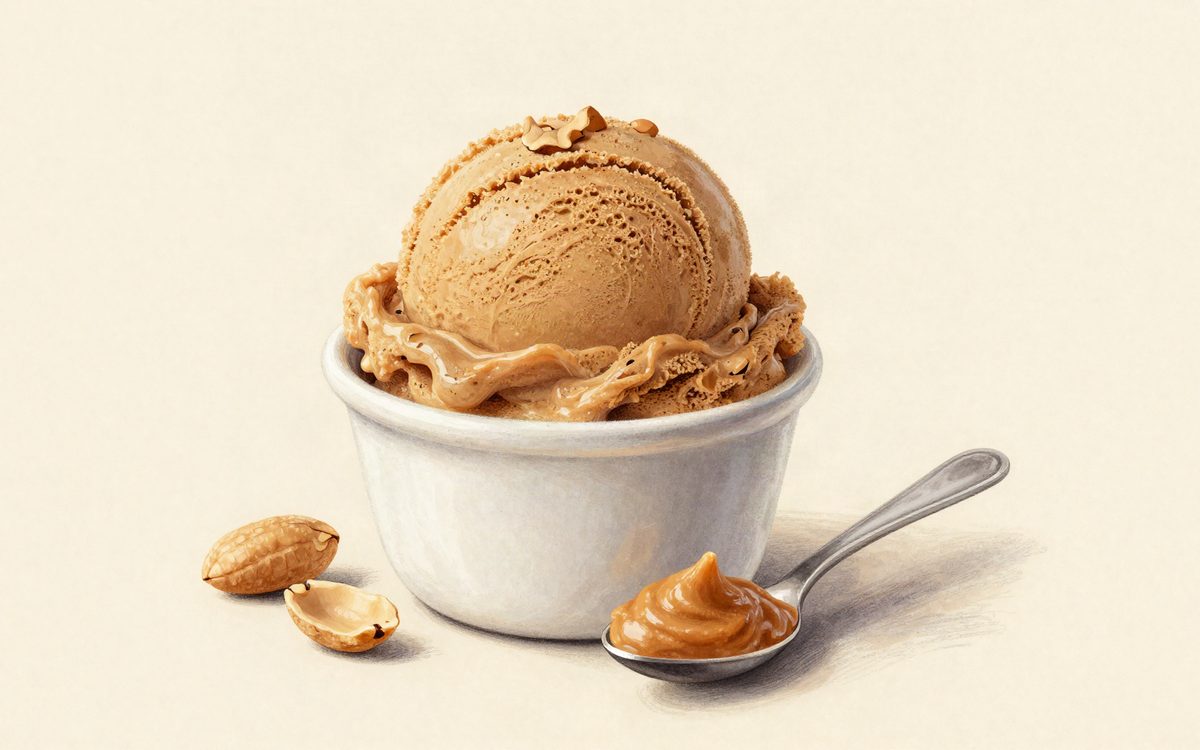
Against the milk version, this one gives something up and takes something back. A dairy sheet would happily carry 120 g of paste per kilo; the plant base caps protein at 3.5%, and peanut runs about 24.4% protein, so 95 g is where it has to stop, with 459 g of oat milk carrying the total to 2.8%. That is the loss, a shade less nut than you would get with milk. The gain is that nothing else is competing for the aroma: there is no coconut milk anywhere on this sheet, coconut oil at 44 g supplies the fat without saying anything, and 2 g of salt puts back the savoury edge people know from the jar.
Fat runs the other way. At 95 g the peanut contributes about 4.7 percent, still short of the 7 percent floor, so 44 g of coconut oil is the main lever. What is interesting is what is absent: there is no coconut milk on this sheet at all. Fat closes at 10.5 with coconut present only as a pure fat, which keeps it out of the aroma and leaves the peanut alone.
Salt sits at 2 g per kilo, double the 1 g used in the other plant recipes here, and that is deliberate. Commercial peanut butter is salted and people recognise the flavour with salt in it; without it the gelato reads as unsalted peanut paste, which most tasters find dull. Salt is not free in the balance either, since it carries a PAC of 585, and the 45 g of dextrose plus 50 g of glucose powder are where the solver absorbed that.
Ingredients
Makes 1000 g of finished base.
| Ingredient | Grams | Home measure |
|---|---|---|
| Oat Milk (Barista) | 459 | 2 cups |
| Water | 200 | 3/4 cup plus 2 tablespoons |
| Sugar (Sucrose) | 100 | 1/2 cup |
| Peanut Paste 100% | 95 | |
| Glucose Powder | 50 | 1/4 cup |
| Dextrose (Glucose) | 45 | 1/4 cup |
| Coconut Oil | 44 | |
| Carob Seed Flour | 4 | |
| Salt | 2 | |
| Inulin (Vegetable Fiber) | 1 |
Loads these exact grams into the free balancer, ready to edit.
Method
Coconut oil melted at 60 to 65 C, paste emulsified under a stick blender, pasteurised at 85 C, aged 4 to 12 hours
- 1Whisk every dry ingredient together first: sugars, milk powder, stabiliser and salt. Dry-blending them stops the stabiliser clumping when it meets liquid.
- 2Warm the liquids to 40 C (104 F), then rain the dry mix in while whisking hard.
- 3Heat to 82 C (180 F) and hold for 2 minutes so the stabiliser hydrates.
- 4Off the heat, whisk in the paste, then blend 60 seconds so the fat emulsifies instead of separating.
- 5Chill in an ice bath to under 5 C (41 F) within 2 hours. Slow cooling is where bacteria and coarse crystals both start.
- 6Age 6 to 12 hours in the fridge under 5 C (41 F). This is when the stabiliser and the milk protein take up water.
- 7Freeze in a shallow metal pan 2 to 3 cm deep, breaking the crystals with a fork every 30 to 40 minutes, 4 to 6 times.
- 8Freeze firm, then temper 10 to 15 minutes in the fridge before scooping.
The balance
All six against the professional range for Vegan Creamy Base.
Protein 2.8 percent against a 3.5 ceiling is what sets the peanut dose, and it is the tightest of the eight indicators here. Fat 10.5 in a 7 to 13 band is the second, and it explains the 44 g of coconut oil: the peanut cannot get there alone and there is no dairy fat available. Sugars at 21.15 percent are higher than the other plant sheets in this group, yet POD only reaches 163.72 against a 195 ceiling, because half the sugar system is dextrose and glucose powder rather than sucrose. That is the trade a nut butter base wants, solids and antifreeze without sweetness fighting the roast. PAC 255.45 sits mid band and part of it comes from the salt rather than from the sugars, which is why the 2 g is weighed and not pinched. Expect this to be the thickest mix of the group at the machine, with low overrun and a longer extraction, because protein is high and there is no coconut milk thinning it.
Estimated nutrition: ~207 kcal · Fat 10.5 g · Sugars 21.2 g · Protein 2.8 g (per 100 g of mix, from the balanced composition).
Specifics for this one. Weigh the 2 g of salt on a 0.1 g scale, because at PAC 585 it moves the freezing behaviour and not only the taste. Use 100 percent peanut paste with no added sugar and no hydrogenated fat: stabilised supermarket peanut butter carries palm fat, which changes the melting curve and is not what the balance assumes. Stir the whole jar before weighing, since the oil separates and the top of the jar is not the same ingredient as the bottom. Melt the coconut oil at 60 to 65 C, add the peanut paste straight after, and keep the stick blender running through both. Pasteurise the liquid phase at 85 C for 30 seconds, then age 4 to 12 hours at 4 C. On allergens this sheet is peanut, coconut and oat at once, and peanut demands serious cross contamination control; if the oat has to be gluten free, insist on certified oats.
If it goes wrong
The peanut paste was never emulsified. Peanut oil separates in the jar and separates again in the mix if it is only stirred in.
Melt the coconut oil to 60 to 65 C, add the paste into it, and run a stick blender through the hot mix until it looks uniform.
Salt was cut. The 2 g per kilo, double what the other plant recipes here use, is what makes the flavour read as the peanut butter people know.
Keep the salt at 2 g, weighed. If you do cut it, understand you are also removing PAC and the base will freeze harder.
Nothing is broken. At 2.8 percent protein and with no coconut milk in the mix, this is the most viscous sheet of the group, so overrun is low and extraction takes longer.
Give it more time in the machine, or in a tray fork it every 30 to 40 minutes as usual and accept a denser result.
Suitable for: Vegan, Vegetarian, Lactose-free, Egg-free
Allergens: gluten, peanuts
- https://www.icecreamscience.com/vegan-ice-cream-selecting-a-non-dairy-fat/
- https://fdc.nal.usda.gov/
- https://proskygelato.com/how-to-make-vegan-gelato/
- https://thisvegangirl.com/gelato-ingredients-vegan/
- The science behind it: Complete Guide to Vegan Gelato
- Ingredient sheet: Peanut Paste 100%
Want to change an ingredient and watch the numbers move? Open the free balancer