Vegan Banana Gelato
Without a drop of dairy it still eats thick and creamy, ripe fruit at the front, a soft nutty finish, and no ice anywhere on the tongue.
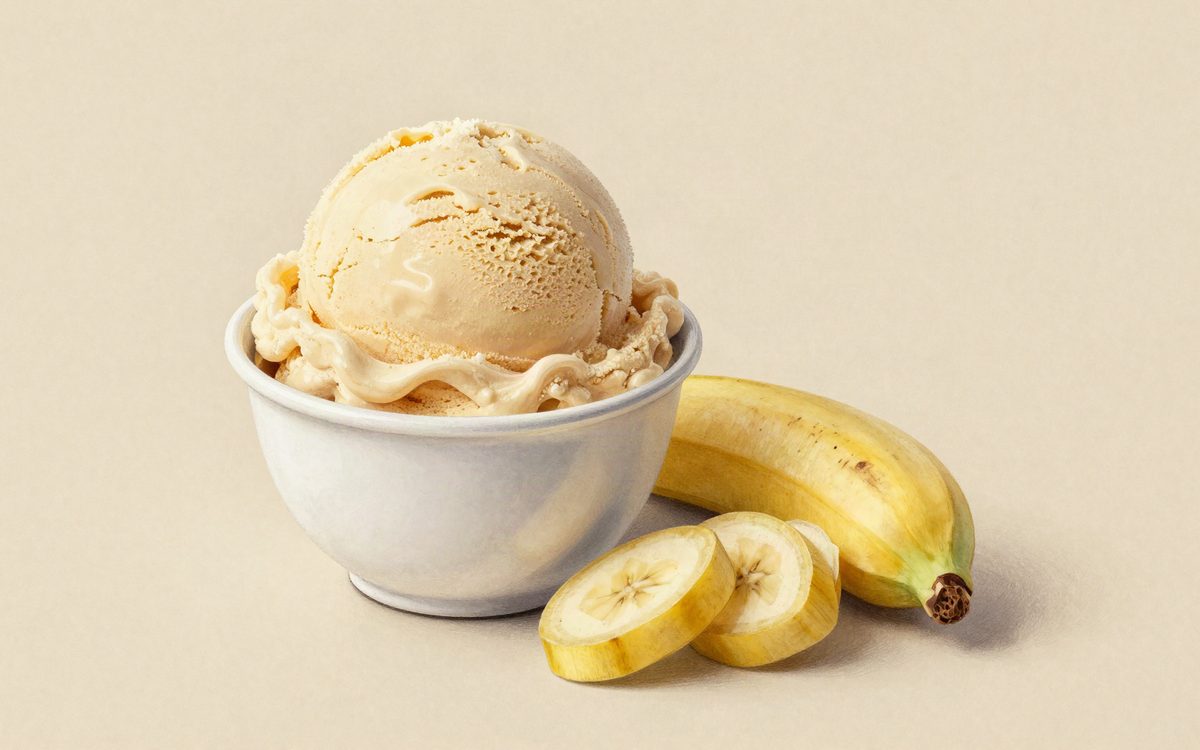
Against the dairy version the trade is easy to describe. What you gain is a cleaner fruit: with no milk fat and no milk sugar in the way, the ripe flavour reads brighter and the sweetness is its own, and there is no sandiness to worry about at all. What you give up is neutrality. Coconut milk at 320 g per kilo brings an aroma of its own and sits beside the fruit rather than behind it, and cashew paste has to do the protein work that milk would have done for free. The fruit still leads, since 300 g per kilo arrives sweet enough that sucrose stops at 80 g and glucose powder takes over the freezing work.
That is why sucrose stops at 80 g, the bottom of its range. Going higher blows past the vegan sweetening ceiling of 195, and POD already reads 185.37. The lever that does the rest of the work is 35 g of glucose powder, at POD 44 and PAC 72: it adds solids and controls the freezing point without sweetening, which is exactly what a naturally sweet fruit needs. PAC ends at 251.89 and total sugars at 20.87 percent, mid window in 17 to 24.
Banana also brings about 1 percent protein plus starch, which helps the body, and 70 g of cashew paste covers the rest of the protein work, so the base reads 2.38. Fat comes from 320 g of coconut milk plus the cashew, landing at 10.48 percent. The 6 g of lemon juice is not a flavour choice: banana browns by polyphenol oxidase within minutes of being cut.
Ingredients
Makes 1000 g of finished base.
| Ingredient | Grams | Home measure |
|---|---|---|
| Coconut Milk | 320 | 1 1/3 cups |
| Banana | 300 | |
| Oat Milk (Barista) | 155 | 1/2 cup plus 2 tablespoons |
| Sugar (Sucrose) | 80 | 1/3 cup plus 1 tablespoon |
| Cashew Paste 100% | 70 | |
| Glucose Powder | 35 | 3 tablespoons |
| Dextrose (Glucose) | 30 | 2 1/2 tablespoons |
| Lemon Juice | 6 | |
| Carob Seed Flour | 4 |
Loads these exact grams into the free balancer, ready to edit.
Method
Lemon dipped blend, fork-broken freeze
- 1Whisk every dry ingredient together first: sugars, milk powder, stabiliser and salt. Dry-blending them stops the stabiliser clumping when it meets liquid.
- 2Warm the liquids to 40 C (104 F), then rain the dry mix in while whisking hard.
- 3Heat to 82 C (180 F) and hold for 2 minutes so the stabiliser hydrates.
- 4Off the heat, whisk in the paste, then blend 60 seconds so the fat emulsifies instead of separating.
- 5Chill in an ice bath to under 5 C (41 F) within 2 hours. Slow cooling is where bacteria and coarse crystals both start.
- 6Age 6 to 12 hours in the fridge under 5 C (41 F). This is when the stabiliser and the milk protein take up water.
- 7Fold the fruit in cold, after ageing. Heating it costs you the fresh aroma and nothing is gained.
- 8Freeze in a shallow metal pan 2 to 3 cm deep, breaking the crystals with a fork every 30 to 40 minutes, 4 to 6 times.
- 9Freeze firm, then temper 10 to 15 minutes in the fridge before scooping.
The balance
All six against the professional range for Vegan Creamy Base.
POD 185.37 against a ceiling of 195 is the tightest constraint in this recipe, and it is why sucrose sits at its 80 g minimum while glucose powder takes 35 g. Glucose powder is the right tool precisely because it is weak as a sweetener and useful as an antifreeze, so PAC still reaches 251.89, comfortably inside 220 to 310, without the mix becoming sugary. Fat 10.48 percent sits mid window in 7 to 13 and comes from coconut milk at 320 g plus cashew paste at 70 g, with the coconut's crystallising fat doing the structural half. Protein 2.38 percent leans on the cashew, MSNF reads 0.0 as it must, and total solids close at 38.51 percent, helped by the 24 percent solids the banana itself brings.
Estimated nutrition: ~206 kcal · Fat 10.5 g · Sugars 20.9 g · Protein 2.4 g (per 100 g of mix, from the balanced composition).
The ripeness of the banana changes the whole recipe. A banana with green at the tips still holds starch instead of sugar and drops the calculated POD below 185.37; an overripe one goes past the 16 percent sugar the formula assumes and the gelato comes out soft. Use a yellow banana with only a few spots. Peel it, cut it, and coat it immediately with the lemon juice, then blend without delay: enzymatic browning starts in under five minutes and there is no way back from it. The fruit goes in raw, into a white base that has already been pasteurised and chilled. Banana also whips in a lot of air and tends toward high overrun, so if your method allows, work it less at the end. If you want a roasted banana note, roast it in the skin at 180 C for 20 minutes, but then recalculate: water evaporates and the solids climb.
If it goes wrong
Polyphenol oxidase, which starts working within five minutes of cutting the fruit
Have the 6 g of lemon juice ready and coat the slices as you cut, then blend immediately
The banana was overripe and carried more than the 16 percent sugar assumed, pushing PAC past 251.89
Use yellow bananas with few spots and weigh 300 g of peeled fruit
Banana whips air readily and this base takes on more overrun than most
Work it less at the end of freezing, fewer and gentler passes once it has set
Suitable for: Vegan, Vegetarian, Lactose-free, Egg-free
Allergens: gluten, tree nuts
- https://www.aprifel.com/en/nutritional-sheet/banana/
- https://icecreamcalc.com/2023/08/22/how-is-pac-and-pod-calculated/
- https://www.eccounpoco.com/blog/sugars-in-gelato
- https://www.icecreamscience.com/blog/vegan-ice-cream-selecting-a-non-dairy-fat
- The science behind it: Complete Guide to Vegan Gelato
- Ingredient sheet: Banana
Want to change an ingredient and watch the numbers move? Open the free balancer