Panna Cotta Gelato
Short and elastic on the spoon, rich without turning waxy, sweet cream first and then a slow vanilla that keeps going after the cold has faded.
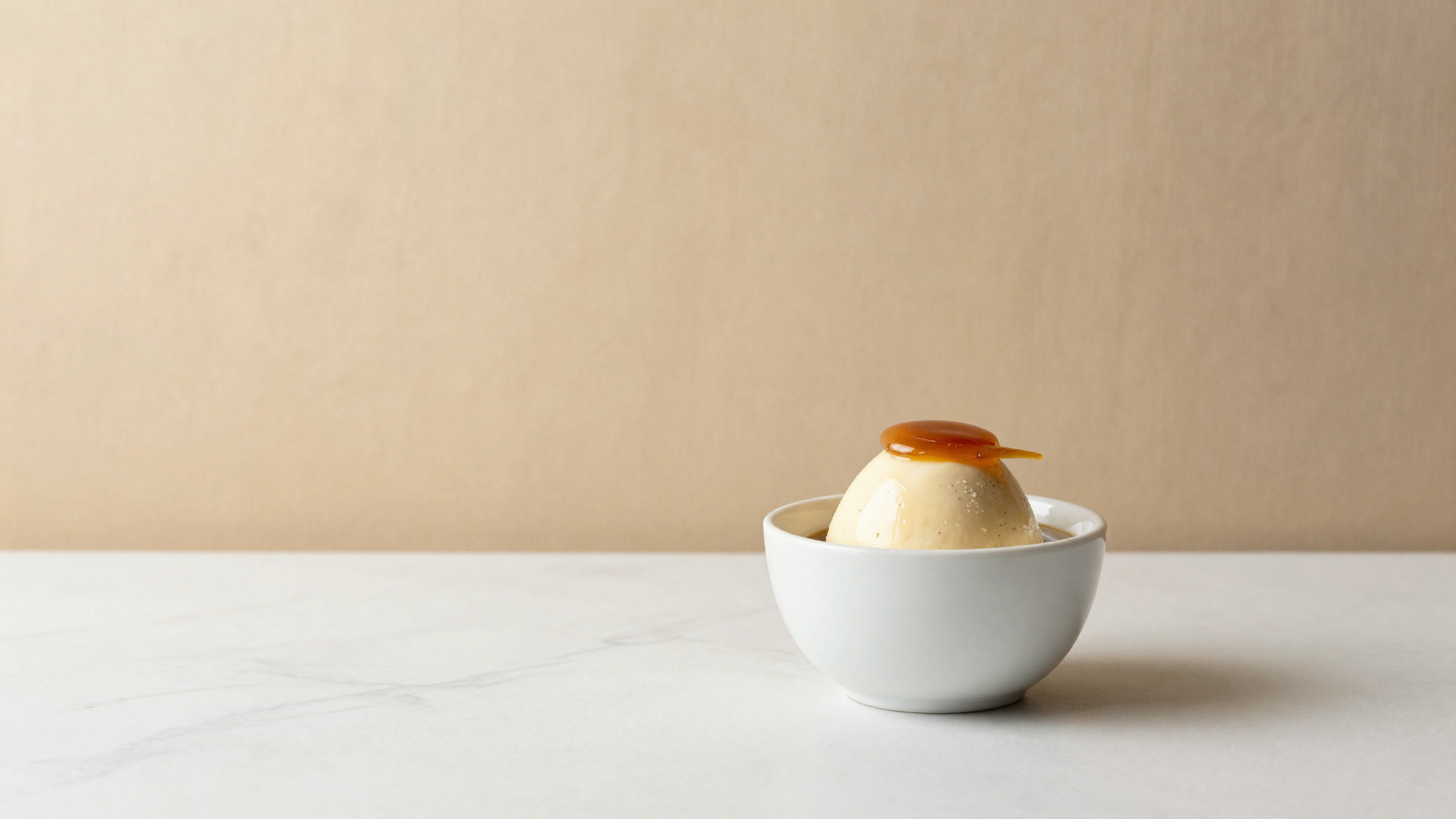
A dessert gel and a churned mix want opposite things from the same powder. Set for a plate, panna cotta takes 10 to 16 g of gelatine per litre of cream and holds its shape when turned out. Put that into a miscela that has to be churned and extruded at minus 8 C and the network forms too early: the mix goes elastic, the dasher slips and overrun collapses. At 4 g per kilo the gelatine works as a protein stabiliser instead, holding free water and giving the short body the dessert is known for, which is also why carob seed flour drops to 2 g. What reaches the tongue is 205 g of cream and one vanilla bean, sweet and unhurried.
Gelatine is fixed at 4 g. A classic panna cotta uses 10 to 16 g per litre of cream, but that dose is designed for a gel that will be turned out of a mould. In a mix that has to be churned and extruded at around minus 8 C, a firm gel is a defect: the network sets before churning, the mix goes elastic, the paddle slips and the overrun collapses. At 4 g the gelatine behaves as a protein stabiliser instead, holding free water and giving the short elastic body that reads as panna cotta, without seizing the machine.
That decision has a knock-on effect you can see in the list. Carob seed flour is at 2 g here, half the 4 g the other milk bases in this batch carry, because gelatine plus carob at full dose would over-hydrocolloid the mix. The vanilla bean at 4 g is the real weight of one pod per kilo, scraped and infused. Everything else is straight balance, and the only unusual constraint is a floor under the cream, because panna cotta without cream fat is just cold milk with gelatine in it.
Ingredients
Makes 1000 g of finished base.
| Ingredient | Grams | Home measure |
|---|---|---|
| Whole Milk | 565 | 2 1/3 cups |
| Heavy Cream 35% | 205 | 3/4 cup plus 2 tablespoons |
| Sugar (Sucrose) | 155 | 3/4 cup plus 1 tablespoon |
| Skim Milk Powder | 40 | 1/3 cup plus 2 tablespoons |
| Dextrose (Glucose) | 25 | 2 tablespoons |
| Gelatin Powder | 4 | |
| Vanilla Bean | 4 | |
| Carob Seed Flour | 2 |
Loads these exact grams into the free balancer, ready to edit.
Method
Gelatine dissolved at 55 C, gel broken with a blender before tray freezing
- 1Whisk every dry ingredient together first: sugars, milk powder, stabiliser and salt. Dry-blending them stops the stabiliser clumping when it meets liquid.
- 2Warm the liquids to 40 C (104 F), then rain the dry mix in while whisking hard.
- 3Heat to 82 C (180 F) and hold for 2 minutes so the stabiliser hydrates.
- 4Chill in an ice bath to under 5 C (41 F) within 2 hours. Slow cooling is where bacteria and coarse crystals both start.
- 5Age 6 to 12 hours in the fridge under 5 C (41 F). This is when the stabiliser and the milk protein take up water.
- 6Freeze in a shallow metal pan 2 to 3 cm deep, breaking the crystals with a fork every 30 to 40 minutes, 4 to 6 times.
- 7Freeze firm, then temper 10 to 15 minutes in the fridge before scooping.
The balance
All six against the professional range for Milk Gelato.
Fat at 9.22 percent against 6 to 12 is the first anchor, and it is what puts a floor under the cream at 205 g rather than letting the solver trade it for milk powder. MSNF at 10.01 percent against 8 to 11.5 is the second, and it explains the 40 g of skim milk powder sitting alongside 565 g of whole milk: the cream carries fat, not solids-not-fat, so the powder has to. Around them, solids read 37.79 against 36 to 42, sugars 17.83 against 16 to 22, POD 180.41 against 140 to 200, PAC 253.64 against 220 to 300, water 62.21 against 58 to 64 and protein 4.07 against 3 to 5. PAC 253.64 is the lowest of the three dairy sheets in this batch, which suits a dessert meant to be eaten firm and cold rather than soft. Lactose comes to 5.46 percent of the mix and 8.77 percent of the water, and the sandiness check passes.
Estimated nutrition: ~197 kcal · Fat 9.2 g · Sugars 17.8 g · Protein 4.1 g (per 100 g of mix, from the balanced composition).
Bloom the gelatine in cold water for 10 minutes and dissolve it between 50 and 60 C. If you drop it into the 85 C pot and hold it there it hydrolyses and loses gel strength, so the order is: bring the mix to 85 C, cool to about 55 C, then dissolve the gelatine into it. From ageing onward the mix will set in the fridge, and that is expected. Before freezing, break the gel with a stick blender for 20 to 30 seconds until it is fluid again, or nothing will move it. The vanilla goes in scraped, pod and all, during pasteurisation, stays in through the whole age and is strained out just before churning.
If it goes wrong
Nothing is wrong. With 4 g of gelatine in it, the aged mix gels at 4 C by design.
Break it with a stick blender for 20 to 30 seconds until it is fluid again, then freeze immediately.
It was added at 85 C and held there, so it hydrolysed. It can also happen if it was dissolved without blooming first.
Hydrate 10 minutes in cold water, pasteurise the base to 85 C, cool to 55 C, and only then stir the gelatine in.
Too much hydrocolloid, usually from raising the gelatine towards dessert dose or from leaving carob at the 4 g other milk bases use.
Keep the pairing as written, 4 g of gelatine with 2 g of carob. They are set against each other on purpose.
Suitable for: Egg-free
Allergens: milk
No ingredient in this recipe contains gluten.
- https://pekis.eu/it/article/gelatina-panna-cotta-guida-alle-dosi-e-proporzioni
- https://www.soniaperonaci.it/panna-cotta/
- https://www.tavolartegusto.it/ricetta/panna-cotta-ricetta-fatta-in-casa/
- The science behind it: Heavy Cream (Panna) for Gelato
- Ingredient sheet: Heavy Cream 35%
- The story of this recipe: Panna Cotta Gelato Recipe
Want to change an ingredient and watch the numbers move? Open the free balancer