Mexican Chocolate Cinnamon Gelato
There is molasses under the spice and cocoa under both, dry and toasty, so the last thing left on the palate is warmth rather than sweetness.
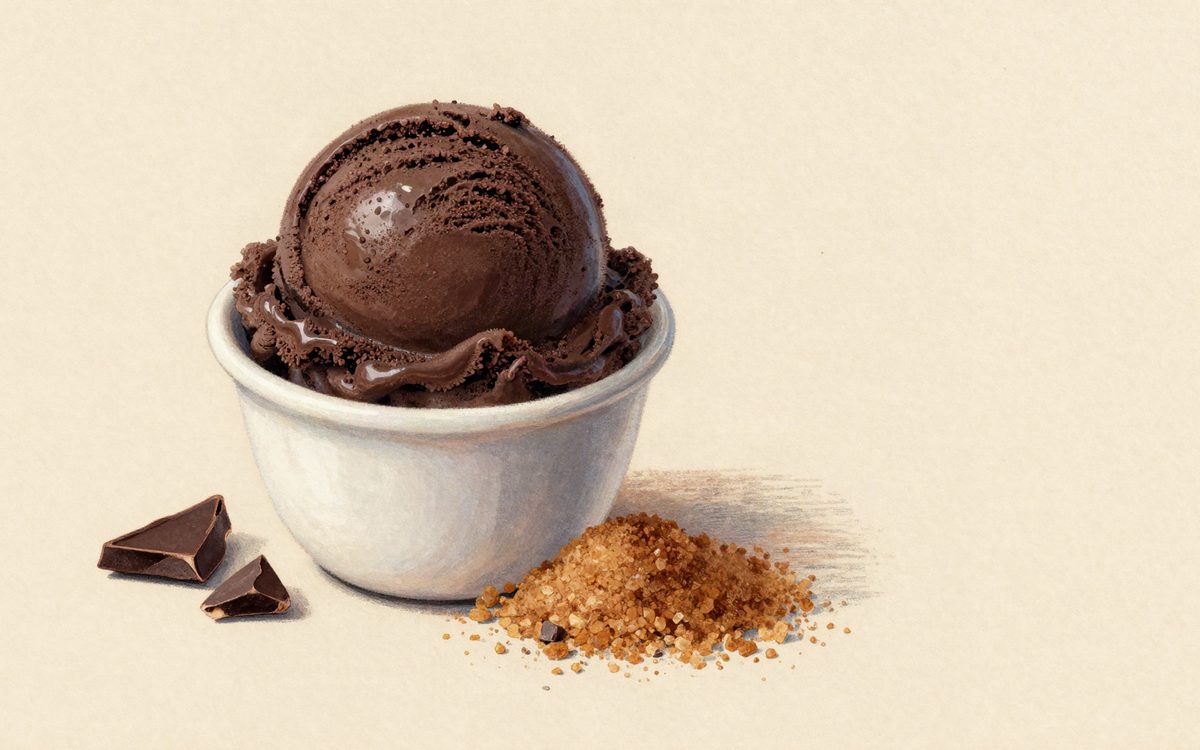
What sets this apart from a plain chocolate gelato gets bought, not made. Dark muscovado should be damp and smell of molasses, since soft brown sugar is refined sugar with colour added back, and the 25 g here are in the formula for that molasses note. Vanilla should say extract on the bottle, not flavouring. The powder should say alkalised at 22 to 24 percent fat, which is what lets 42 g carry colour and roast with almost no sugar of its own. Behind those three, the structure is plain: 48 g of a 70 percent bar, 14 g of cocoa paste, 5 g of cinnamon and 696 g of whole milk.
The muscovado is not there to sweeten. It is there for the molasses, for the raw sugar and faint acid notes that separate this from a plain chocolate gelato. Its cost is solids: cinnamon powder is 89% solids and muscovado is 96%, so together they push 27 g of dry matter into the mix before any sugar is added on purpose. That is why sucrose stops at 95 g per kilo here instead of the 105 to 160 a milk gelato usually takes.
Fat finishes at 6.19% against a 6 to 12 window, close to the floor, and that is deliberate. There are only 5 g of heavy cream per kilo. The 104 g of cocoa in three forms, 42 g of powder, 14 g of paste and 48 g of dark chocolate 70%, carry what fat there is, and 696 g of whole milk carry everything else. Protein lands at 4.58% against a 3 to 5 ceiling, which is what all that milk plus 25 g of skim milk powder buys you.
Ingredients
Makes 1000 g of finished base.
| Ingredient | Grams | Home measure |
|---|---|---|
| Whole Milk | 696 | 3 cups |
| Sugar (Sucrose) | 95 | 1/3 cup plus 2 tablespoons |
| Dark Chocolate 70% | 48 | |
| Cocoa Powder 22-24% | 42 | |
| Dextrose (Glucose) | 35 | 3 tablespoons |
| Muscovado Sugar | 25 | |
| Skim Milk Powder | 25 | 1/4 cup |
| Cocoa Paste | 14 | |
| Cinnamon Powder | 5 | |
| Heavy Cream 35% | 5 | 1 teaspoon |
| Vanilla Extract | 4 | |
| Carob Seed Flour | 4 | |
| Salt | 2 |
Loads these exact grams into the free balancer, ready to edit.
Method
Cocoa and cinnamon hydrated in cold milk, then heated
- 1Whisk every dry ingredient together first: sugars, milk powder, stabiliser and salt. Dry-blending them stops the stabiliser clumping when it meets liquid.
- 2Warm the liquids to 40 C (104 F), then rain the dry mix in while whisking hard.
- 3Heat to 82 C (180 F) and hold for 2 minutes so the stabiliser hydrates.
- 4Melt the chocolate to 45 C (113 F) and stir it into the hot base off the heat, then blend 60 seconds until glossy.
- 5Off the heat, whisk in the paste, then blend 60 seconds so the fat emulsifies instead of separating.
- 6Chill in an ice bath to under 5 C (41 F) within 2 hours. Slow cooling is where bacteria and coarse crystals both start.
- 7Age 6 to 12 hours in the fridge under 5 C (41 F). This is when the stabiliser and the milk protein take up water.
- 8Freeze in a shallow metal pan 2 to 3 cm deep, breaking the crystals with a fork every 30 to 40 minutes, 4 to 6 times.
- 9Freeze firm, then temper 10 to 15 minutes in the fridge before scooping.
The balance
All six against the professional range for Milk Gelato.
PAC finishes at 255.12 in a 220 to 300 window, comfortably mid range, and 35 g of dextrose per kilo do most of that work: dextrose depresses the freezing point far harder than sucrose per gram, so the tub stays scoopable at minus 12 C without pushing sweetness up. POD sits at 164.8 against 140 to 200, on the restrained side, which is what lets 104 g of cocoa read as bitter chocolate rather than as sweetened cocoa. Total solids land at 37.74% inside 36 to 42, and a good share of that came from the cinnamon and the muscovado rather than from added sugar, which is exactly why sucrose could stay at 95 g. Lactose ends at 7.59% of the water phase, under the threshold where it starts to crystallise into sandiness in storage.
Estimated nutrition: ~182 kcal · Fat 6.2 g · Sugars 16.6 g · Protein 4.6 g (per 100 g of mix, from the balanced composition).
The thing that behaves differently here is the cinnamon: it does not dissolve, it stays in suspension, so the grind decides the result. Use finely milled cinnamon and hydrate it together with the 42 g of cocoa powder in cold milk, otherwise it floats and forms a film on top during maturation. Cinnamon is mildly antimicrobial and also slows gum hydration, so add the 4 g of carob seed flour first, with the milk already at 40 C, and only then the cinnamon. Muscovado is acidic and hygroscopic: dissolve it completely before the mix passes 70 C, because an undissolved muscovado crystal will nucleate an ice crystal. The correct texture here is slightly rustic. Traditional Mexican chocolate is grainy on purpose, so do not chase a completely smooth mouthfeel. Serve at minus 12 C.
If it goes wrong
The cinnamon was added to warm liquid and floated instead of dispersing.
Whisk the 5 g of cinnamon and the 42 g of cocoa powder into the cold milk before any heat, so both hydrate together.
Muscovado crystals that never dissolved, each one acting as a seed for an ice crystal.
Dissolve the 25 g of muscovado fully while the mix is still below 70 C, and do not add it as a last minute correction.
The carob seed flour went in after the cinnamon and had to compete with it for water.
Add the 4 g of carob at 40 C first, give it time, then the cinnamon.
Suitable for: Vegetarian, Egg-free
Allergens: milk
- https://www.frontiercoop.com/recipes/mexican-chocolate-ice-cream-with-cayenne
- https://food52.com/recipes/22375-mexican-hot-chocolate-ice-cream
- https://icecreamcalc.com/2021/03/12/chocolate-gelato/
- https://www.dairyscience.info/ice-cream/154-ice-cream-mix.html
- The science behind it: Spice Infusion in Gelato
- Ingredient sheet: Dark Chocolate 70%
Want to change an ingredient and watch the numbers move? Open the free balancer