Espresso Gelato
Lean where a coffee gelato is usually creamy, it hits bitter and bright at the same moment and keeps the roast going well past the last of the melt.
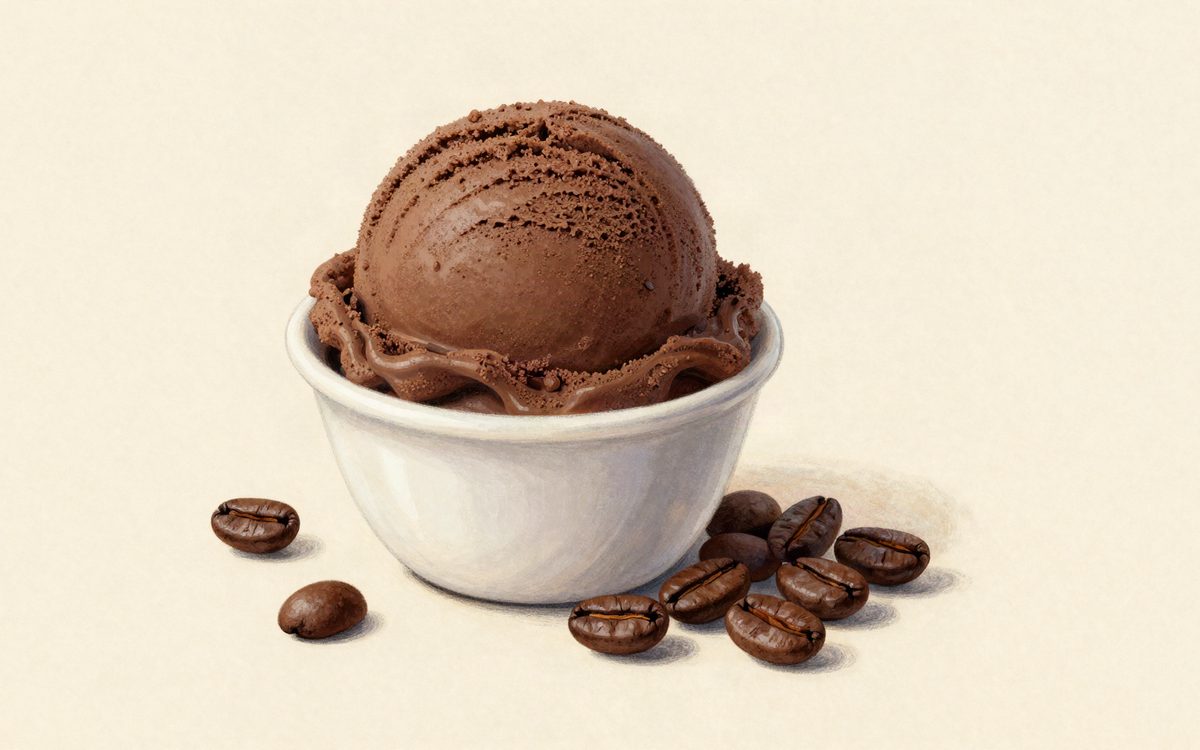
There is an Italian version of coffee that this sheet takes into the freezer more or less intact: short, dark, drunk without much done to it. The gelato follows the same logic. Espresso goes in at 160 g per kilo with 10 g of instant behind it, which is about as far as the roast can be pushed before it turns ashy and grey. Cream was deliberately held back to 160 g, since fat coats the tongue and dulls the bright acidity that makes coffee taste like coffee. Glucose powder and skim milk powder carry the solids instead, building body and PAC without adding sweetness the base cannot afford.
The compensation cannot come from more sugar, because POD has a ceiling of 200. So it comes from solids that do not sweeten. Skim milk powder is raised to 50 g/kg and glucose powder enters at 35 g/kg, and glucose powder reads POD 44, meaning 44% of the sweetening power of sucrose. Total sugars reach 18.63%, well inside the 16 to 22 band, while POD stays at 169.47, mid band, and solids land at 38.16%.
Instant coffee at 10 g/kg is the practical ceiling before the taste turns gray and astringent. Cream is deliberately lower than in a gentler coffee build, 160 g/kg, which puts fat at 7.21%, in the lower half of the 6 to 12 band. Fat coats the tongue and mutes the bright acidity that defines an espresso, so this formula is leaner on purpose rather than by accident.
Ingredients
Makes 1000 g of finished base.
| Ingredient | Grams | Home measure |
|---|---|---|
| Whole Milk | 425 | 1 3/4 cups |
| Espresso (Rich) | 160 | |
| Heavy Cream 35% | 160 | 2/3 cup |
| Sugar (Sucrose) | 125 | 1/2 cup plus 2 tablespoons |
| Skim Milk Powder | 50 | 1/2 cup plus 1 tablespoon |
| Glucose Powder | 35 | 3 tablespoons |
| Dextrose (Glucose) | 30 | 2 1/2 tablespoons |
| Instant Coffee | 10 | |
| Carob Seed Flour | 4 | |
| Salt | 1 |
Loads these exact grams into the free balancer, ready to edit.
Method
Pre-frozen bowl, hand mixer in three rounds
- 1Whisk every dry ingredient together first: sugars, milk powder, stabiliser and salt. Dry-blending them stops the stabiliser clumping when it meets liquid.
- 2Warm the liquids to 40 C (104 F), then rain the dry mix in while whisking hard.
- 3Heat to 82 C (180 F) and hold for 2 minutes so the stabiliser hydrates.
- 4Chill in an ice bath to under 5 C (41 F) within 2 hours. Slow cooling is where bacteria and coarse crystals both start.
- 5Age 6 to 12 hours in the fridge under 5 C (41 F). This is when the stabiliser and the milk protein take up water.
- 6Freeze in a shallow metal pan 2 to 3 cm deep, breaking the crystals with a fork every 30 to 40 minutes, 4 to 6 times.
- 7Freeze firm, then temper 10 to 15 minutes in the fridge before scooping.
The balance
All six against the professional range for Milk Gelato.
The interesting pair here is sugars at 18.63% against POD at only 169.47. Normally those two rise together, and they do not here because 35 g/kg of the sugar load is glucose powder at POD 44, which buys mass and body without buying sweetness. That is what lets solids reach 38.16% despite 160 g/kg of espresso diluting everything, while PAC lands at 262.62, mid the 220 to 300 range, so the block stays workable after a short temper. The second number worth watching is fat at 7.21%. It is low in the 6 to 12 band by design, since fat would round off the acidity that makes this taste like espresso rather than like coffee milk, and a mix with that little fat holds less overrun, which is why churn temperature matters more here than in a richer base.
Estimated nutrition: ~189 kcal · Fat 7.2 g · Sugars 18.6 g · Protein 3.7 g (per 100 g of mix, from the balanced composition).
Pull the shots short, ristretto style, and cool them in an ice bath before they meet the base. Espresso left standing hot oxidizes within minutes and the aroma gives way to bitterness. Because the coffee load is high, the pH of the finished mix falls further than in a lighter coffee build, so fold the coffee in below 40 C and under agitation, never poured into the middle of a hot pot. Churn the base properly cold, around 4 C. With fat at only 7.21% there is less structure to hold air, and a base that goes in lukewarm comes out with large crystals and a sandy mouthfeel.
If it goes wrong
The base went into the churn warm. At 7.21% fat there is little structure to trap air and slow crystal growth.
Bring the mix to 4 C before churning, and mature it cold first so the 50 g/kg of milk powder is fully hydrated.
Instant coffee above 10 g/kg, or espresso that oxidized while it sat hot.
Keep instant at the 10 g/kg in the formula and ice-bath the shots as soon as they are pulled.
Glucose powder swapped for sucrose. That removes the non-sweetening solids and drops total solids below what the espresso water demands.
Keep the 35 g/kg of glucose powder. It is what holds solids at 38.16% without pushing POD past its 200 ceiling.
Suitable for: Vegetarian, Egg-free
Allergens: milk
- https://carpigiani.com/en/news/coffee-gelato
- https://mattadlard.com/recipes/coffee-gelato/
- https://www.biggerbolderbaking.com/coffee-gelato-recipe/
- https://www.recipesfromitaly.com/coffee-gelato-recipe/
- The science behind it: Gelato Total Solids
- Ingredient sheet: Espresso (Rich)
Want to change an ingredient and watch the numbers move? Open the free balancer