What Xanthan Gum Is
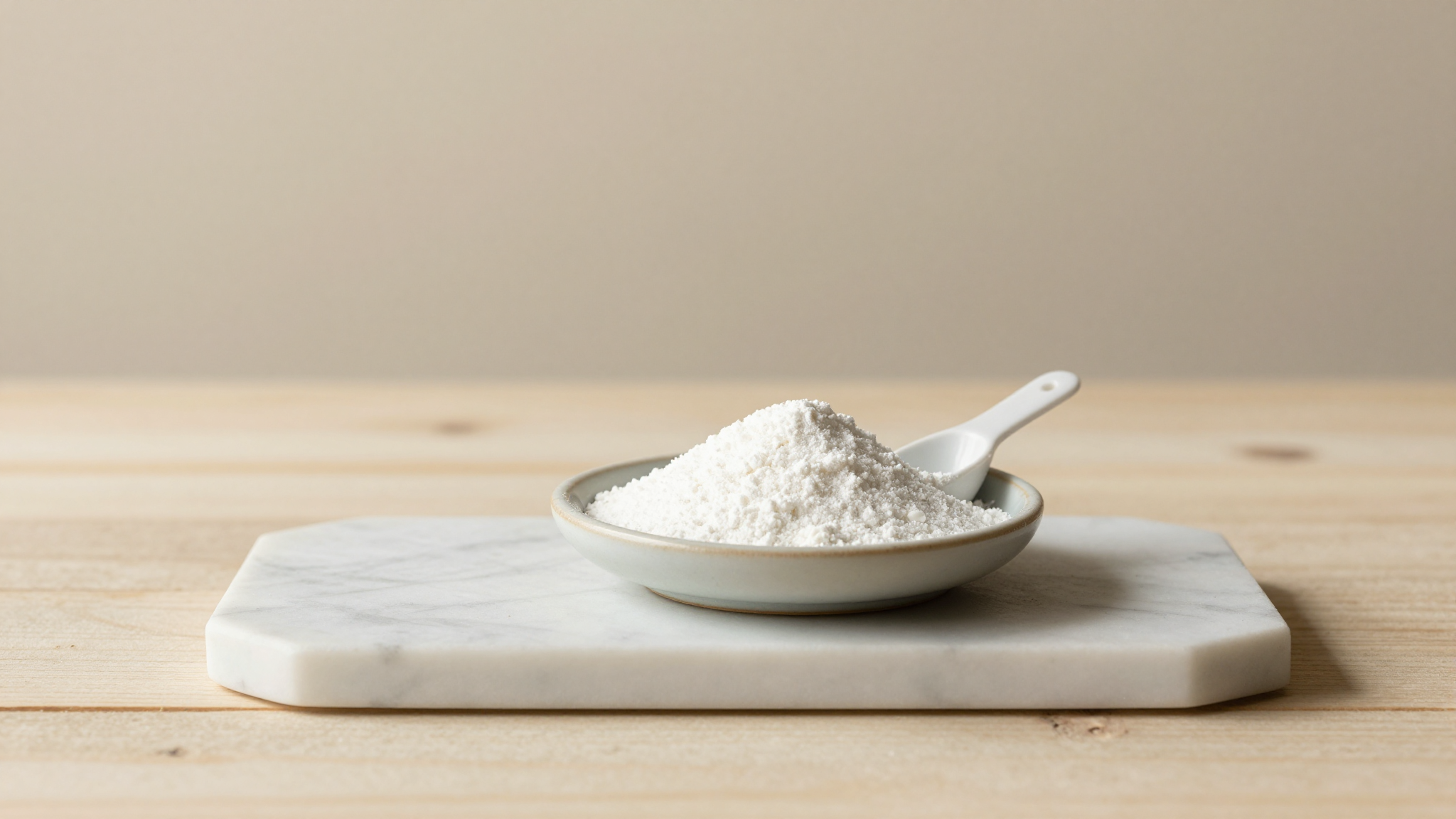
Xanthan gum (E415) is a polysaccharide produced by fermenting sugar (corn or sugar beet) with the bacterium Xanthomonas campestris. The result is a fine cream-colored powder that hydrates instantly in cold water and produces a distinctly viscous, slightly elastic texture.
In food science, xanthan is one of the most powerful viscosity-builders available — a 1% solution is already gel-like. That makes it valuable in tiny doses but dangerous if overdosed: above 0.15% in gelato, the texture becomes ropey or slimy, a defect that's impossible to mask.
Why Pros Use Xanthan in Stabilizer Blends
Xanthan brings two specific properties that guar and LBG don't deliver:
1. Air-cell stabilization. Xanthan's elastic structure stabilizes the air cells incorporated during mantecazione. The result: more consistent overrun retention during 5–7 days of showcase storage.
2. Heat-shock resistance. When gelato experiences temperature fluctuations (showcase door opening, transport), the xanthan network resists the partial melting + refreezing that creates ice crystals. Premium blends with xanthan show measurably less heat-shock damage than blends without.
Quick reference. Xanthan: 0.02–0.10% of mix weight. Always as a third gum in blends with guar + LBG. Above 0.15% = slimy defect.
Recommended Dose
| Use case | Xanthan dose |
|---|---|
| Standard pro blend (guar + LBG + xanthan) | 0.05–0.08% (5–8% of total stabilizer weight) |
| Premium blend (more heat-shock protection) | 0.08–0.10% |
| Sorbet stabilizer | 0.05–0.10% |
| Solo use | Avoid — produces ropey texture |
Typical pro blend ratio: 60% LBG + 30% guar + 10% xanthan. So at a total stabilizer dose of 0.30%, the xanthan contributes 0.03% of mix weight.
Why Xanthan Goes Wrong So Easily
Xanthan's viscosity-building power per gram is 8–10× stronger than guar. A small overdose feels enormous on the palate. Common mistake: a baker who's used to xanthan in gluten-free baking (where 1–2% is normal) tries 1% in gelato and produces a stretchy, gummy disaster.
Stick to under 0.10% and treat xanthan as a "support gum" — it's not a primary stabilizer in gelato.
When NOT to Use Xanthan
- If you only have guar + LBG and the texture is already smooth and stable through your normal shelf life: don't add xanthan to "improve" it.
- For very delicate flavors (fior di latte, light fruit sorbets) where any rope-y texture would be detected: use the lower dose (0.03–0.05%) or skip entirely.
- For high-protein gelato or vegan recipes that already have inulin and starches: the body is sufficient without xanthan.
How to Add Xanthan
Same technique as guar and LBG: pre-blend with sucrose (10:1 sugar:xanthan ratio), then add to the mix during pre-pasteurization. Xanthan hydrates instantly so it's actually the easiest of the three gums to disperse — but the small dose makes weighing critical (use a 0.1 g precision scale).
Sourcing
| Source | Price (EUR/kg) |
|---|---|
| Standard food-grade xanthan | €8–15 |
| Premium gelato-grade xanthan | €15–25 |
Most pre-blended neutro products from PreGel, MEC3, Fabbri already include xanthan — you don't need to add it separately. Only relevant if you're building your own blend from raw gums.
Related Concepts
- Locust bean gum (LBG) — primary gum in any blend
- Guar gum — fast-hydration partner
- Carrageenan — alternative third gum
Test stabilizer dose effects in the free balancing calculator — even small changes in total stabilizer percentage shift body and melt rate noticeably.
Run these numbers live
Open the free balancer and adjust ingredients as you read.