What Locust Bean Gum Is
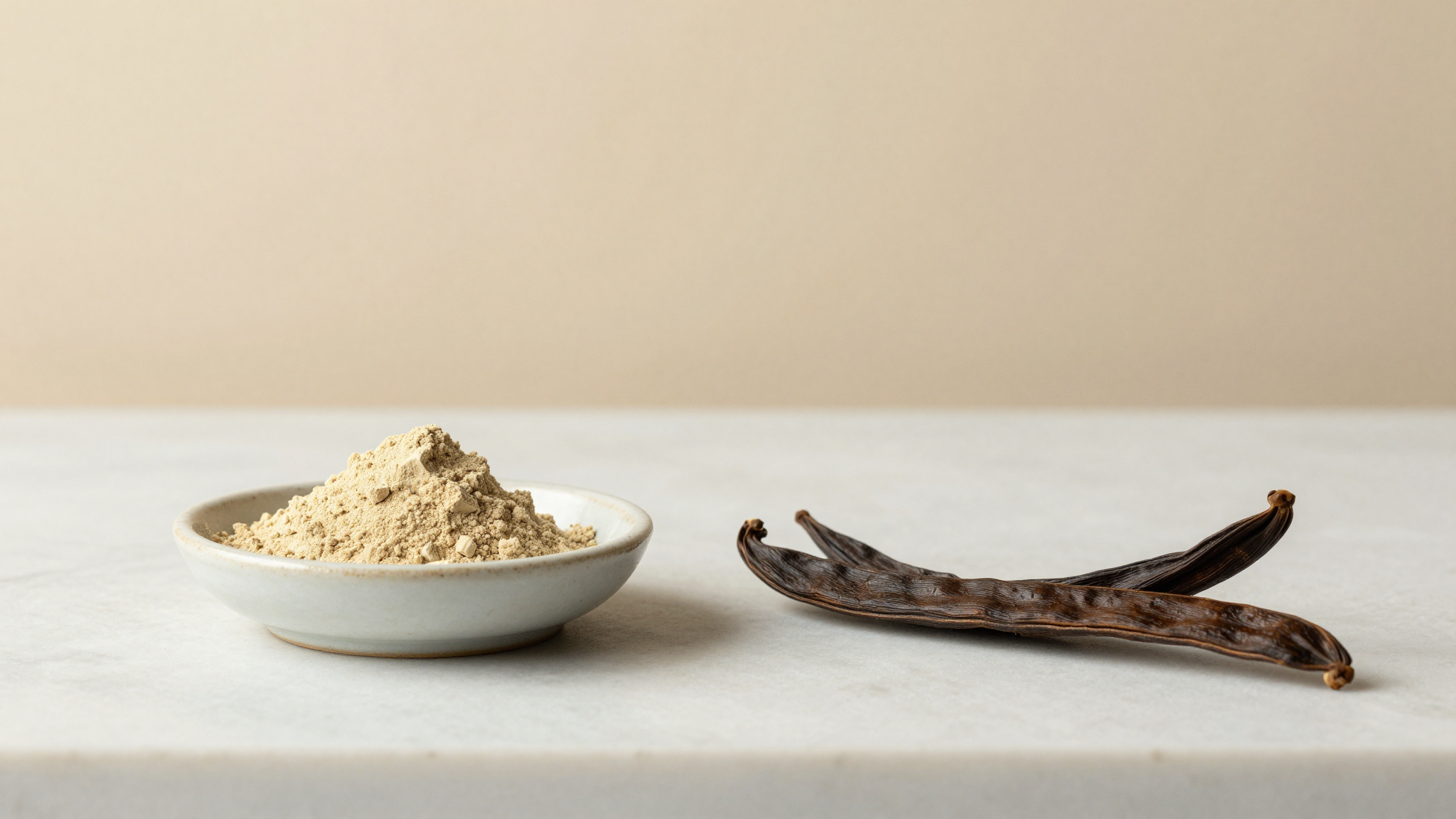
Locust bean gum (LBG, E410, also called carob gum) is a galactomannan extracted from the seeds of the carob tree (Ceratonia siliqua) — the same tree whose pods produce carob powder, the chocolate substitute. Grown mostly in Mediterranean countries (Spain, Portugal, Italy, Morocco). Sold as a fine cream-colored powder.
In professional gelato, LBG is the gold-standard stabilizer. The reason: its water-binding structure develops slowly, builds long-range networks, and produces the smoothest texture and best ice crystal control of any single hydrocolloid.
Why LBG Is Different from Guar
| Property | Guar gum | LBG |
|---|---|---|
| Hydration temperature | Cold (4°C) | Hot (>80°C) |
| Hydration speed | Fast (minutes) | Slow (during pasteurization) |
| Network range | Short | Long |
| Ice crystal control | Good | Excellent |
| Cost | Low (€4–8/kg) | Medium-high (€15–30/kg) |
| Solo use viable? | No (slimy) | Yes (smooth) |
Guar produces fast viscosity but doesn't bind water as effectively over weeks of storage. LBG produces structure that holds for the full shelf life of artisan gelato (5–7 days) without recrystallization.
Quick reference. LBG: dose 0.15–0.30% of mix weight. Activates above 80°C. Standard partner: guar gum at 60:30 ratio (LBG:guar). The dominant gum in any pro stabilizer blend.
Recommended Doses
| Recipe type | LBG dose (% of mix) | g per 1000 g mix |
|---|---|---|
| Solo LBG | 0.20–0.30 | 2.0–3.0 |
| In standard blend (with guar) | 0.15–0.20 | 1.5–2.0 |
| In premium blend (with guar + xanthan/carrageenan) | 0.10–0.15 | 1.0–1.5 |
Above 0.3% solo LBG: the texture becomes overly chewy and slow-melting — desired in some industrial recipes (extends shelf life), undesired in artisan gelato where clean melt matters.
Why Heat Matters for LBG
LBG's molecular structure is more compact than guar's. Cold water hydrates only the outer layer; the bulk of the molecule stays inactive. Heating to >80°C unfolds the molecule and lets it hydrate fully — that's when the long-range network forms.
Implications:
- Standard high pasteurization (85°C × 2 min): activates LBG perfectly
- Low pasteurization (65°C × 30 min): activates LBG partially — texture noticeably weaker
- Cold-process recipes (no pasteurization): LBG doesn't work; switch to guar or use a pre-hydrated LBG product
For sorbets that traditionally aren't pasteurized, use the heat-the-syrup-base method: heat the water + sugar + LBG to 85°C briefly, then cool and combine with the cold fruit purée. Activates the LBG without heat-damaging the fruit.
Sourcing — Cost and Supply
| Source | Price (EUR/kg) |
|---|---|
| Standard food-grade LBG | €15–25 |
| Premium gelato-grade LBG (CBG-200 or similar) | €25–40 |
| Pre-blended neutro (PreGel, MEC3) | €15–25 (effective price for blend) |
LBG supply is sometimes constrained — the carob tree only produces seeds at scale in specific Mediterranean regions, and bad harvests in 2018 and 2022 caused price spikes of 200–300% temporarily. Maintain a small reserve stock if you depend heavily on it.
How to Add LBG to a Recipe
Same technique as guar:
Method 1: pre-blend with sucrose (5:1 sugar:LBG ratio), then add to the mix at room temperature before pasteurization. The sugar prevents clumping.
Method 2: disperse in egg yolks for yellow-base recipes.
Pasteurize the mix to ≥80°C so LBG fully hydrates — this is non-negotiable for the gum to work.
Related Concepts
- Guar gum — LBG's standard partner
- Xanthan gum, carrageenan — common third gums
- Pasteurizzatore (pasteurizer) — equipment that activates LBG
Pro recipes typically use 0.30–0.45% total stabilizer with LBG contributing 50–60% of that. Test in the free balancing calculator to see how stabilizer dose affects your overall mix structure.
Run these numbers live
Open the free balancer and adjust ingredients as you read.