What Guar Gum Is
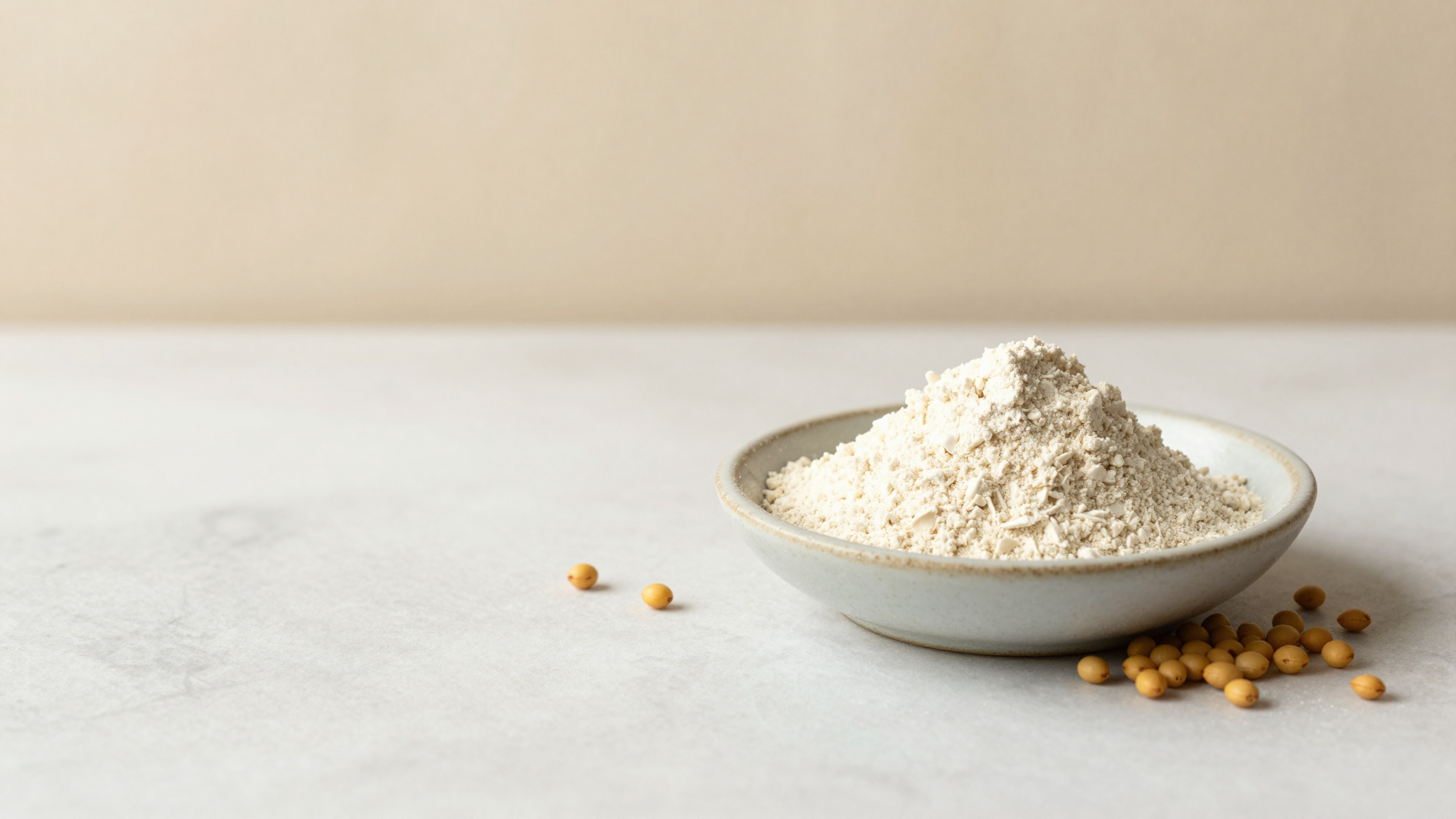
Guar gum (E412) is a galactomannan — a polysaccharide extracted from the seeds of the guar plant (Cyamopsis tetragonoloba), grown mostly in India and Pakistan. Sold as a fine white-to-yellow powder. The most cost-effective hydrocolloid stabilizer widely used in ice cream, gelato, sauces, baked goods, and pet food.
In gelato, guar's main job is to bind free water and increase viscosity — the same job all hydrocolloid stabilizers do. What makes guar distinctive is that it hydrates fast and cold (within minutes at 4°C, fully at room temperature) — unlike locust bean gum (LBG) which needs heat above 80°C to fully hydrate.
How Guar Works in Gelato
When you add guar to a mix, the molecules unfold and create a network that binds water molecules into the structure. Bound water = water that doesn't freeze into large crystals. Result: smoother texture, slower melt, better resistance to heat shock.
A typical gelato at 0.2% guar (2 g per kg of mix) shows:
- Visible viscosity increase in the unfrozen phase
- Smaller average ice crystal size after churning
- ~20% slower melt rate vs no-stabilizer control
Quick reference. Guar gum: dose 0.1–0.3% of mix weight. Hydrates cold (works at 4°C). Best paired with LBG at 30:60 ratio (guar:LBG).
Recommended Doses
| Recipe type | Guar dose (% of mix) | g per 1000 g mix |
|---|---|---|
| Solo guar (rare) | 0.20–0.25 | 2.0–2.5 |
| In standard blend (with LBG) | 0.10–0.15 | 1.0–1.5 |
| In premium blend (with LBG + xanthan) | 0.05–0.10 | 0.5–1.0 |
Above 0.3% solo guar: the texture starts feeling slightly slimy or "gummy" — fine for some industrial recipes but not desired in artisan gelato.
Why Guar Is Almost Never Used Alone
Guar produces fast viscosity but the gel structure is short-range. LBG produces long-range structure but needs heat to develop. Used solo, guar over-thickens the mix in the short term and under-binds water over the medium term (during freezer storage).
The pro standard is a guar + LBG blend — typically 30% guar + 60% LBG + 10% xanthan or carrageenan. The blend gives both the fast hydration during pasteurization (guar) and the long-term ice crystal control during showcase storage (LBG).
Most commercial neutro products from PreGel, MEC3, Fabbri are exactly this kind of blend, pre-formulated for gelato applications.
How to Add Guar to a Recipe
Method 1 — pre-blend with sugar. Mix the guar with 5× its weight of sucrose, then add to the mix at room temperature. The sugar prevents clumping when the powder hits liquid.
Method 2 — disperse in oil. For yolk-base recipes: mix guar with the egg yolks before tempering. Same principle — disperse in non-aqueous medium first.
Never add guar directly to a hot or cold mix without dispersing first — it forms lumps that don't dissolve, ruining the texture.
Cost and Supply
| Source | Price (EUR/kg) |
|---|---|
| Wholesale food-grade guar | €4–8 |
| Premium "low-bloom" guar | €8–12 |
| Pre-blended neutro (PreGel, MEC3) | €15–25 |
Pre-blended neutro is more expensive per kg but you use less of it (the blend is formulated for the right ratios). For most artisan operations, neutro is the practical choice — predictable results without needing to develop your own blend.
Related Concepts
- Locust bean gum (LBG) — guar's standard partner
- Xanthan gum — common third gum in pro blends
- Stabilizers and emulsifiers — overview category
Test how guar dose affects your recipe in the free balancing calculator — most pros land at 0.30–0.45% total stabilizer weight, with guar contributing 30–40% of that.
Run these numbers live
Open the free balancer and adjust ingredients as you read.