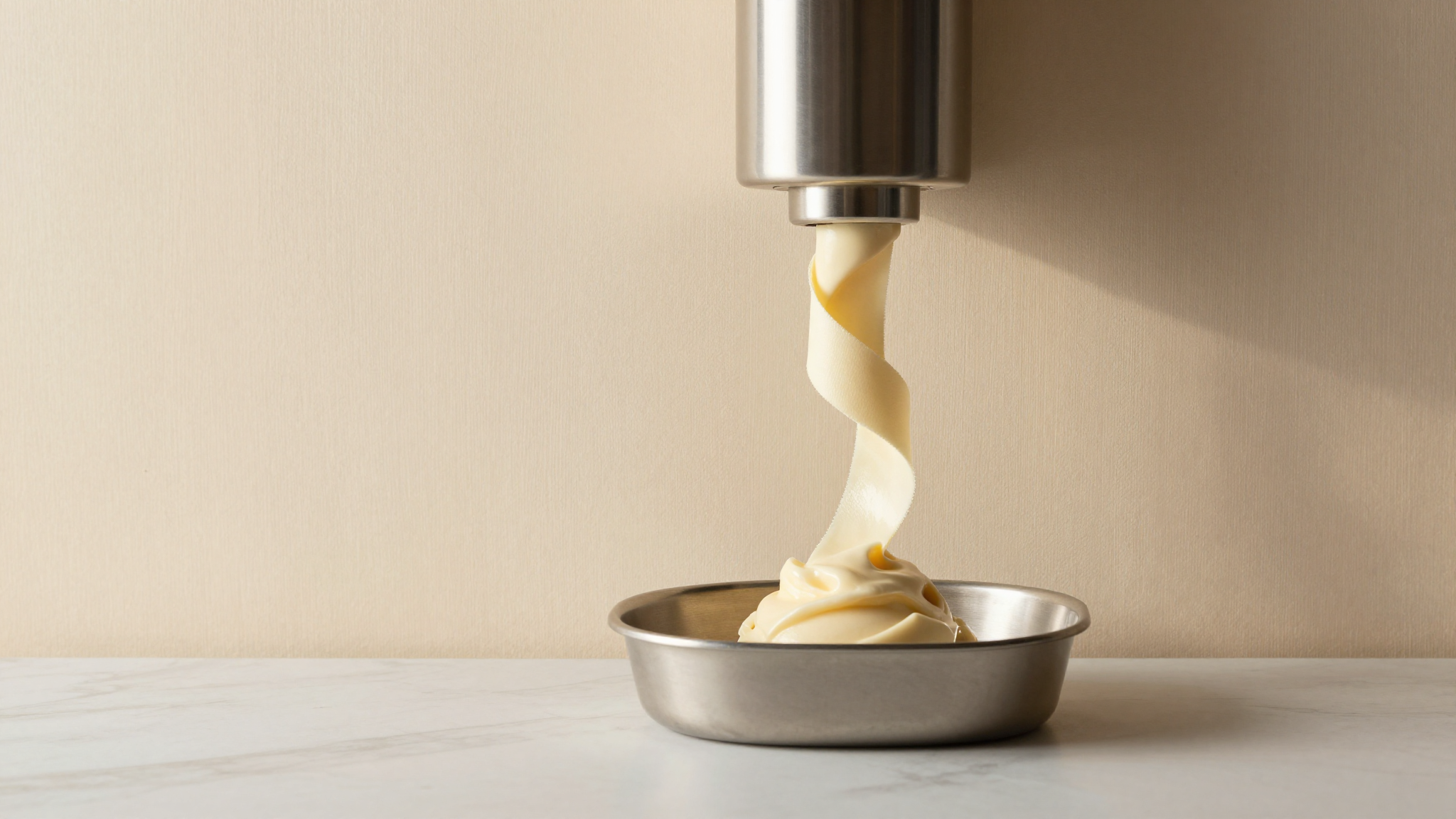
Mantecazione (mahn-teh-kah-tsee-OH-neh) is the Italian word for the churning step that transforms a balanced, aged gelato base into finished gelato. The mix enters the batch freezer (mantecatore) at 4°C, and over the next 8–14 minutes the dasher beats it while the chilled cylinder pulls heat out — incorporating air, freezing water into microscopic crystals, and producing the dense, smooth structure that defines artisan gelato.
What Mantecazione Means
The verb mantecare literally means "to churn" or "to whip into a creamy state." In gelato terminology it refers specifically to the step performed inside the mantecatore (batch freezer or continuous freezer). The English equivalent is "churning," but Italian pros use mantecazione because it carries technical weight that "churning" lacks — implying not just stirring but the entire combined action of cooling, aerating, and structuring the mix simultaneously.
What Happens During Mantecazione
Three things happen at once inside the cylinder:
1. Heat extraction. The mix enters at 4°C. The cooled cylinder wall (jacketed with refrigerant at around −25°C) pulls heat out at a steady rate. The mix temperature drops from 4°C → 0°C → −5°C → −8°C over the course of the cycle.
2. Crystal formation. As the mix cools through 0°C, water starts forming ice crystals against the cold cylinder wall. The dasher continuously scrapes those crystals off and folds them back into the bulk, preventing them from growing large. The result: thousands of microscopic crystals instead of a few big ones.
3. Air incorporation. The dasher's mechanical action whips air into the mix, creating microscopic air cells. The amount of air determines the overrun — typically 20–35% for professional gelato, vs 50–100% for American ice cream.
The dasher speed controls the balance between aeration and density. Slower dasher (80–120 RPM) means less air, denser product — the gelato profile. Faster dasher means more air, lighter product — the ice cream profile.
Target Conditions
Quick reference. Mix entering: 4°C. Extraction: −8 to −10°C. Dasher speed: 80–120 RPM (for gelato). Time: 8–14 minutes per batch. Overrun: 20–35%.
Extracting too warm (above −7°C) means the product hasn't structured yet — air escapes during transfer to storage, and the gelato will collapse. Extracting too cold (below −12°C) means the product is too stiff to flow out of the machine cleanly, and you risk damaging the dasher or the motor.
The sweet spot — extraction at −8 to −10°C — produces a soft-serve consistency that holds shape immediately when scooped into a tray, then hardens in the blast chiller over the next 20–40 minutes.
How Long Mantecazione Takes
A typical artisan batch (5–8 kg of mix) takes 8–14 minutes in a modern professional machine. Variables that affect the time:
- Mix composition. High-fat, high-MSNF mixes freeze slower than low-fat sorbet bases.
- Mix volume. A full cylinder takes longer than a half-load.
- Refrigerant temperature. Older machines run warmer refrigerant and take longer.
- Ambient temperature. A 35°C summer day adds 2–3 minutes vs a 20°C winter day.
Most modern batch freezers signal automatically when extraction temperature is reached. For machines without sensors, an experienced gelataio listens to the motor pitch — when it shifts to a deeper, more strained tone, the product is ready.
Related Concepts
- Batch freezer (mantecatore) — the equipment that does mantecazione
- Overrun
- Maturazione (aging) — the step before mantecazione
- Abbattimento (blast freezing) — the step after mantecazione
- PAC (anti-freezing power)
- Complete professional gelato guide
Validate your recipe before mantecazione. Open the Free Gelato Balancing App and check that your PAC, POD, MSNF and Total Solids are in range — that determines whether the mantecazione produces gelato or a defect.
Run these numbers live
Open the free balancer and adjust ingredients as you read.