
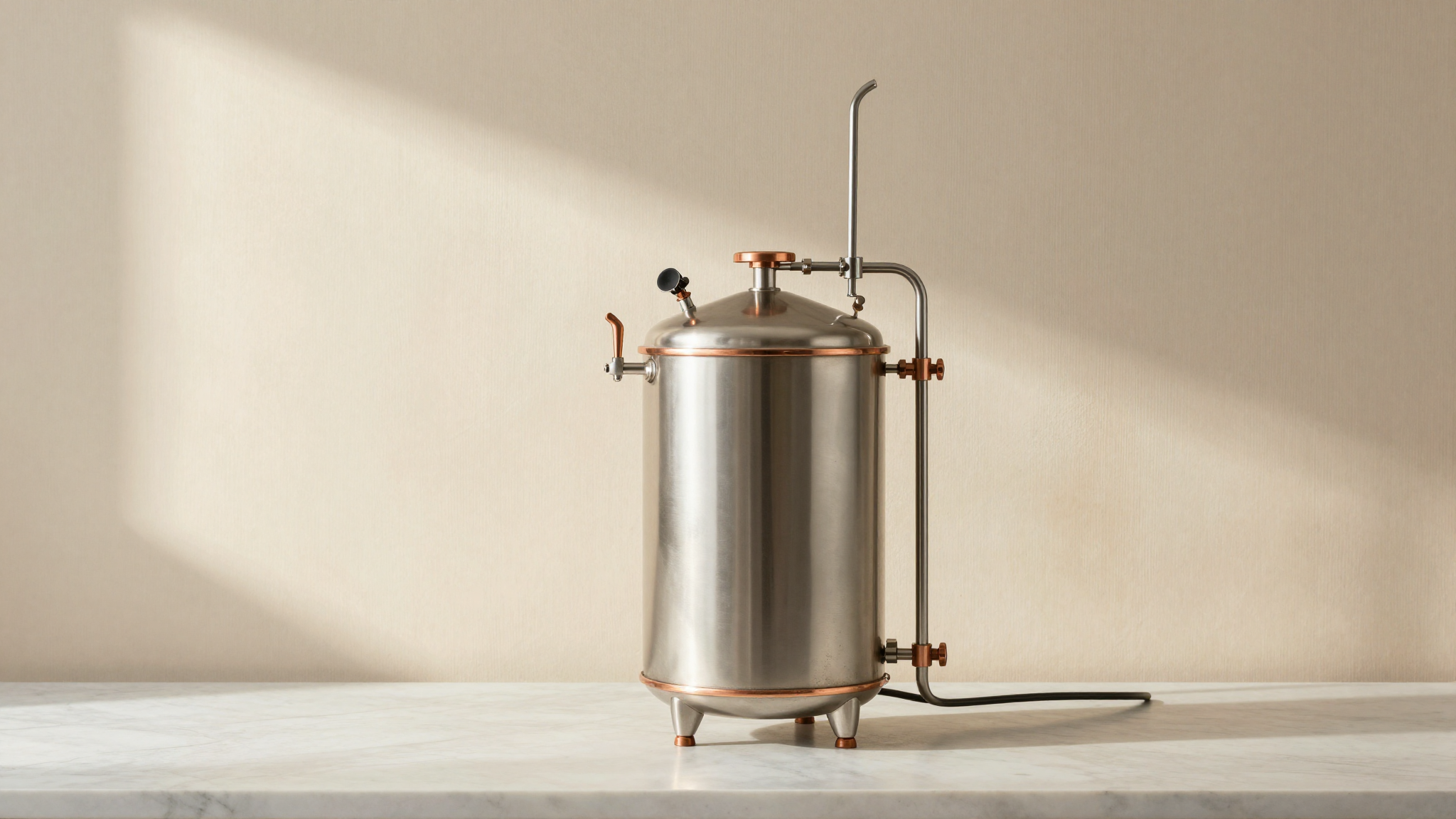
Pasteurizzatore (pahs-toy-reed-zah-TOH-reh) is the Italian gelato pasteurizer — the equipment that heats a gelato base to 65°C (low pasteurization) or 85°C (high pasteurization), holds the temperature for the required time, then cools it rapidly to 4°C. It is one of the three core machines in any commercial gelateria, alongside the mantecatore (batch freezer) and the conservation cabinet. For commercial sale of dairy gelato, certified pasteurization equipment is mandatory in the EU and most jurisdictions.
What the Pasteurizzatore Does
Three jobs in sequence:
1. Heat the mix. The base is loaded cold and heated to either 65°C (low pasteurization) or 85°C (high pasteurization) via the heated jacket of the tank. Continuous stirring during heating prevents scorching at the wall and ensures even temperature.
2. Hold the temperature. Maintained for the required time: 30 minutes at 65°C, or 2 minutes at 85°C. This is the kill step — sufficient time × temperature to inactivate pathogenic bacteria (Salmonella, Listeria, E. coli) and most spoilage bacteria.
3. Cool rapidly. After the hold, the heated jacket switches to refrigerant. The mix drops from 85°C to 4°C as quickly as possible — modern machines do this in 60–90 minutes. Rapid cooling is non-negotiable: between 60°C and 10°C is the danger zone for bacterial regrowth, and slow cooling here defeats the entire pasteurization.
Low vs High Pasteurization
| Method | Temperature | Hold time | When used |
|---|---|---|---|
| Low pasteurization | 65°C | 30 minutes | Premium artisan recipes, more delicate aromatics preserved |
| High pasteurization | 85°C | 2 minutes | Standard commercial method, faster cycle, slightly more protein denaturation |
Most commercial gelaterias use high pasteurization (85°C / 2 min) by default — it is faster and the slight extra protein denaturation actually helps with structure. A few premium artisans use low pasteurization for very delicate fruit-forward recipes where high heat would damage flavor.
Quick reference. Standard cycle: load mix at room temp → heat to 85°C → hold 2 min → cool to 4°C in under 90 minutes → transfer to aging tank (or use combined unit). Total cycle: 2–3 hours.
Combined Pasteurizer + Aging Tank Units
Most modern artisan equipment combines pasteurizer and aging tank in one unit. After cooling to 4°C, the mix simply stays in the same tank for the maturazione (aging) step — no transfer required, less risk of contamination, less labor.
A combined unit also lets you batch-pasteurize overnight: load mix in the evening, program the cycle, the machine pasteurizes and then holds at 4°C until morning. Production starts the next day with a fully aged base ready to churn.
Brands that make combined pasteurizer + aging tank units: Carpigiani (Pastomaster line), Bravo (Pastomatic), Telme (Pastopiu), Frigomat (Klima), Mantel, Promag.
Brands and Pricing
| Tier | Capacity | Brands | Price range (EUR, new) |
|---|---|---|---|
| Entry-level commercial | 30–60 L | Bravo Pastomatic, Telme Pastopiu | €3,000–€6,000 |
| Mid-range commercial | 60–120 L | Carpigiani Pastomaster, Frigomat Klima | €8,000–€15,000 |
| Premium / large | 120 L+ | Carpigiani full-size, Bravo top-line | €15,000–€25,000 |
For a small artisan gelateria producing 40–60 L of finished gelato per day, a 60 L combined unit is the typical choice. Used equipment can be found at 40–60% of new price; verify the cycle still works correctly before buying.
Related Concepts
- Maturazione (aging) — the next step after pasteurization
- Mantecatore (batch freezer)
- How much does it cost to open a gelateria?
- HACCP for gelaterias
- Complete professional gelato guide
Plan your equipment investment. A combined pasteurizer + aging tank is the single most important production purchase for a new gelateria. Consult our gelateria cost guide for the complete budget.
Run these numbers live
Open the free balancer and adjust ingredients as you read.