What Tara Gum Is
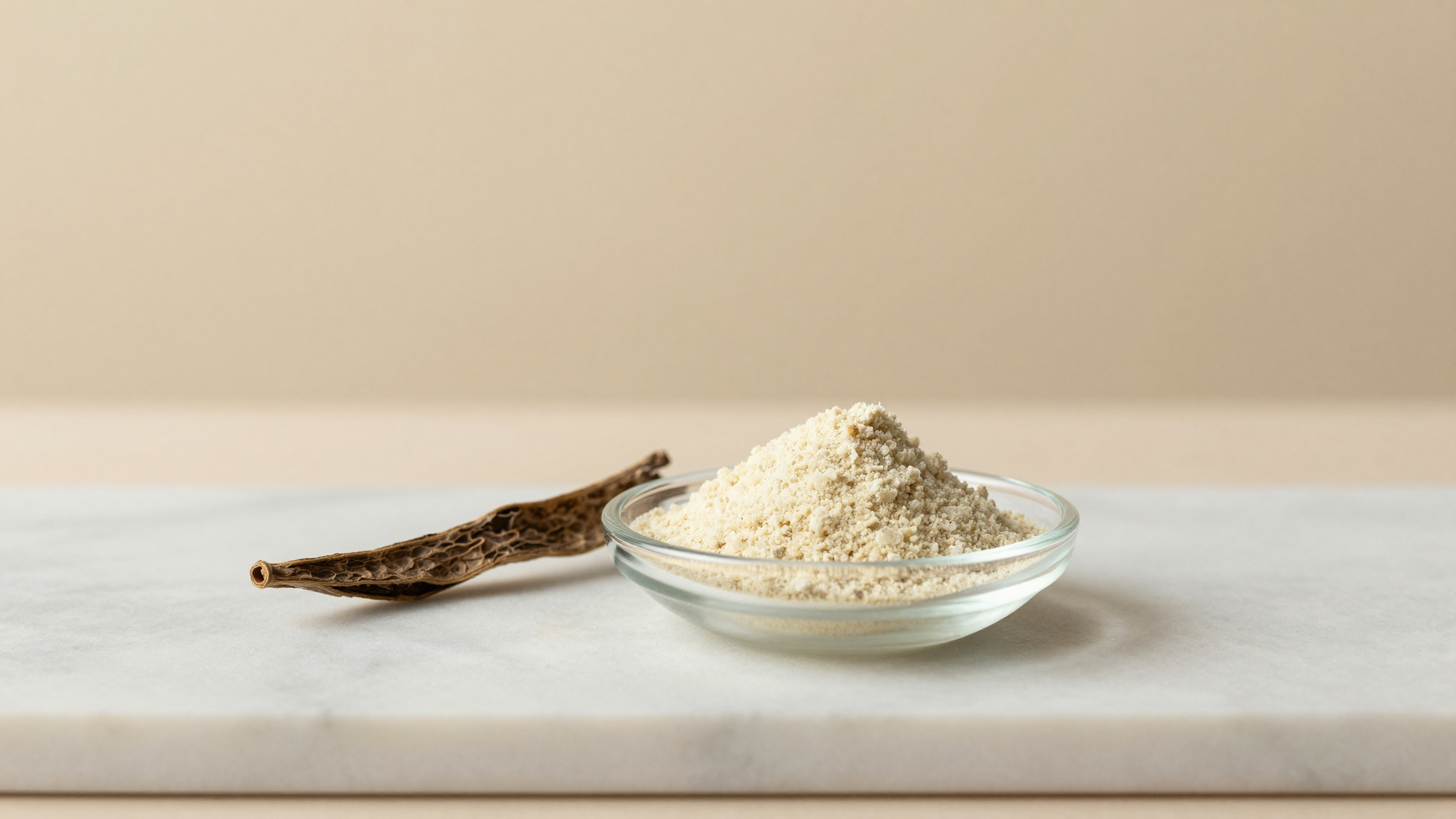
Tara gum (E417) is a galactomannan extracted from the seeds of the tara tree (Caesalpinia spinosa), native to South America and grown commercially mostly in Peru. Sold as a fine cream-colored powder. Chemically it's a cousin of guar and LBG — the difference is the ratio of galactose side-chains on the mannose backbone.
| Gum | Galactose:mannose ratio |
|---|---|
| Guar | 1:2 |
| Tara | 1:3 |
| LBG | 1:4 |
Lower galactose substitution means less water solubility but stronger long-range networks. Tara sits in the middle, which is why it behaves like a "guar that needs warmth" or an "LBG that doesn't need full pasteurization."
When Tara Gum Wins Over Guar or LBG
Cold-process and low-pasteurization recipes. LBG needs ≥80°C to fully activate. If your recipe uses 65°C × 30 min low pasteurization, LBG only partially hydrates. Tara hydrates much more completely at 60–80°C — bridging the gap.
Sorbets without heat treatment. For sorbets where you want to keep raw fruit character (no pasteurization), tara hydrates partially in cold water, giving more body than guar without the slime, and more reliable than LBG which would barely activate.
Carob supply backup. When LBG prices spike (as in 2018 and 2022), tara is the closest functional substitute at typically half the cost.
Quick reference. Tara: dose 0.15–0.25% of mix weight. Hydrates fully at 60–80°C. Solo use viable. Best alternative to LBG in cold or low-pasteurization processes.
Recommended Doses
| Use case | Tara dose (% of mix) |
|---|---|
| Solo tara (cold-process sorbet) | 0.20–0.30 |
| Standard blend (with guar or LBG) | 0.10–0.15 |
| Premium blend (with LBG + xanthan) | 0.08–0.12 |
Above 0.30% solo tara: starts feeling slightly chewy, similar to high-dose LBG.
How to Add Tara to a Recipe
Same technique as the other galactomannans: pre-blend with sucrose at a 5:1 sugar:tara ratio to prevent clumping. Add to the mix at room temperature before pasteurization.
For cold-process recipes: blend the tara/sugar mixture into a small portion of warm water (60°C, off the heat is fine) and whisk until smooth, then combine with the cold mix.
Sourcing — Cost and Supply
| Source | Price (EUR/kg) |
|---|---|
| Standard food-grade tara | €12–20 |
| Premium gelato-grade tara | €20–28 |
Less common in mainstream gelato suppliers than guar/LBG. You'll find it most easily through ingredient distributors that serve molecular gastronomy, vegan food, or fair-trade markets.
Limitations
Tara is not as well-studied as guar or LBG in dairy gelato applications, and recipes that work with LBG don't always swap 1:1 to tara. Test in small batches when transitioning. The flavor is neutral — no off-notes when used at appropriate dose.
Related Concepts
- Guar gum — fast-cold partner
- Locust bean gum (LBG) — premium long-range partner
- Xanthan gum — common third gum
Test stabilizer combinations in the free balancing calculator — different gums shift body and melt rate noticeably even at the same total stabilizer dose.
Run these numbers live
Open the free balancer and adjust ingredients as you read.