What Egg Yolks Bring to Gelato
Three functional roles in a yellow-base recipe:
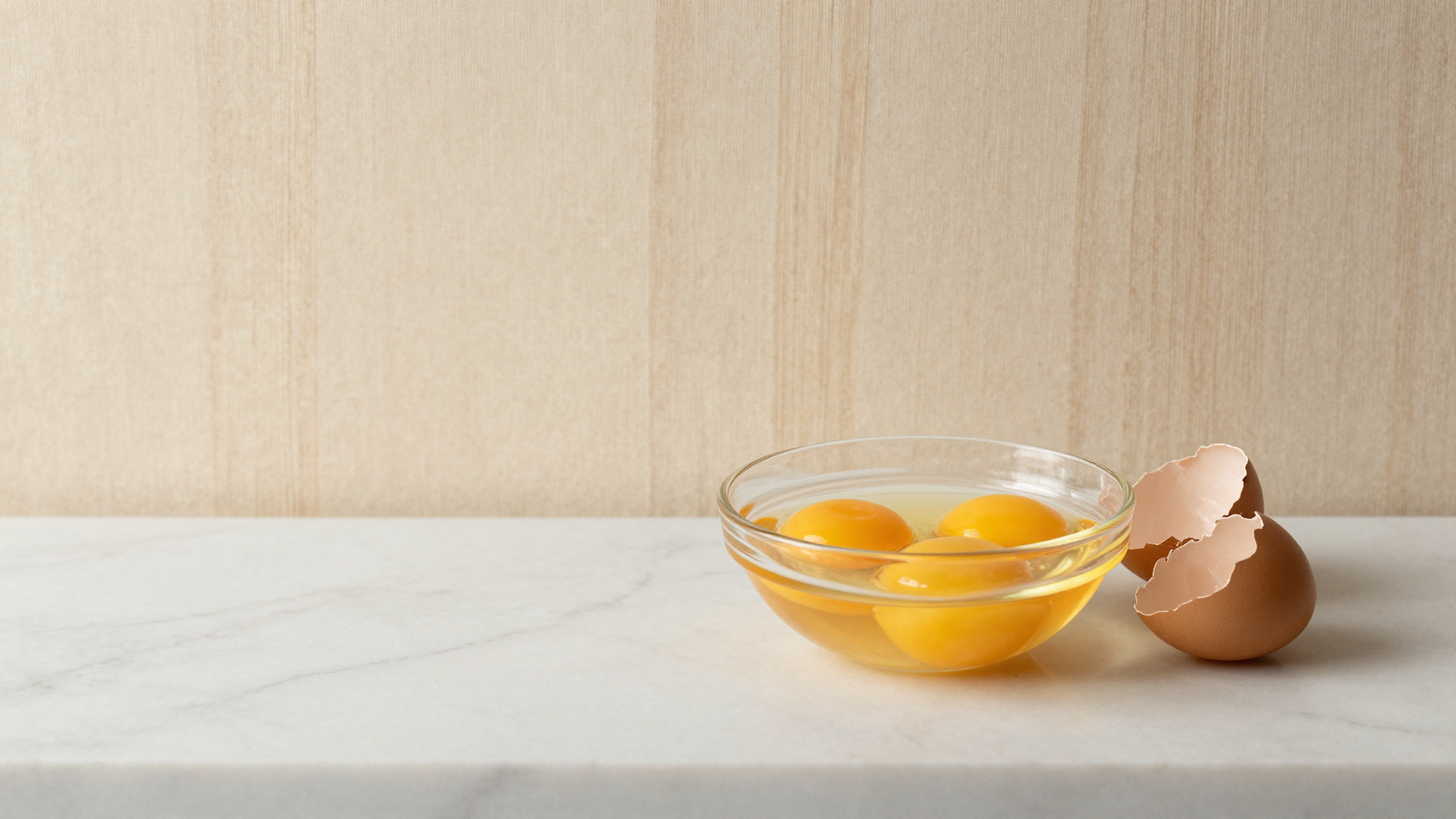
1. Lecithin (natural emulsifier). Each yolk contains roughly 9% lecithin — the same compound used as a food-additive emulsifier elsewhere. Lecithin coats fat globules and helps them distribute evenly along air-cell membranes during mantecazione. Result: more stable overrun, drier texture, slower melt.
2. Fat (~32%). Yolks add fat without adding water — different from cream which adds both. A 100 g addition of yolks delivers ~32 g of fat to the mix.
3. Color and flavor. The carotenoids in yolks give yellow-base gelato its characteristic golden hue and contribute a subtle eggy richness that defines flavors like crema all'uovo, zabaione, and traditional chocolate.
Composition of a Typical Egg Yolk
Per 100 g of fresh egg yolk (separated from white):
| Component | Weight |
|---|---|
| Water | 50 g |
| Fat | 32 g |
| Protein | 16 g |
| Lecithin (within fat) | ~9 g |
| Total Solids | 50 g |
Use this composition when balancing — yolks contribute 32% fat and 50% Total Solids per gram added.
How Much to Use
| Recipe type | Egg yolks (g per 1000 g) | Result |
|---|---|---|
| White base (fior di latte, fruit) | 0 | No yolks — clean dairy character |
| Light custard | 60–80 | Subtle richness, light yellow tint |
| Standard yellow base | 90–100 | Crema all'uovo, chocolate, hazelnut |
| Premium / restaurant-style | 110–120 | Rich, almost pâtissière texture |
| Above 130 | — | Too eggy, dense; only for specialty applications |
Yellow-base recipes typically have 8–9% fat (vs 6–7% in white base) precisely because the yolks contribute fat. Don't double-count by also adding extra cream — recalculate when switching base types.
Pasteurization with Egg Yolks
Egg yolks must be pasteurized — Salmonella risk. Two approaches:
Combined pasteurization. Add yolks to the mix before pasteurization. The 85°C × 2 min cycle (or 65°C × 30 min low pasteurization) kills bacteria. Standard practice in commercial gelaterias.
Pre-pasteurized yolk product. Liquid pasteurized yolks (sold in cartons by dairy suppliers) are convenient and safer if your in-house pasteurization is uncertain. Same composition as fresh yolks; check the spec sheet for added sugar (some products are pre-sweetened).
For home gelato without a pasteurizer: heat the mix to 75°C while stirring constantly for 1 minute, then ice-bath cool. Acceptable for personal use, not for commercial sale.
Cost Impact
A yolk-based recipe costs 15–25% more per kg than the equivalent white-base recipe. Math:
- 100 g of egg yolks ≈ ~5 yolks (each weighs ~20 g)
- At €0.30/yolk wholesale: €1.50 for 100 g of yolks
- vs €0.05 of cream + €0.05 of SMP that you might remove to compensate: net ~€1.40 added per kg of mix
Reflect that in pricing — yellow-base flavors should be priced 10–20% higher than white-base in your menu.
Related Concepts
- Soy lecithin — synthetic alternative to yolk lecithin
- Whole milk, heavy cream (panna)
- Mantecazione
Validate yellow-base recipes in the free balancing calculator — yolks contribute fat and Total Solids that easily push the recipe out of range if you don't account for them.
Run these numbers live
Open the free balancer and adjust ingredients as you read.