What Soy Lecithin Is
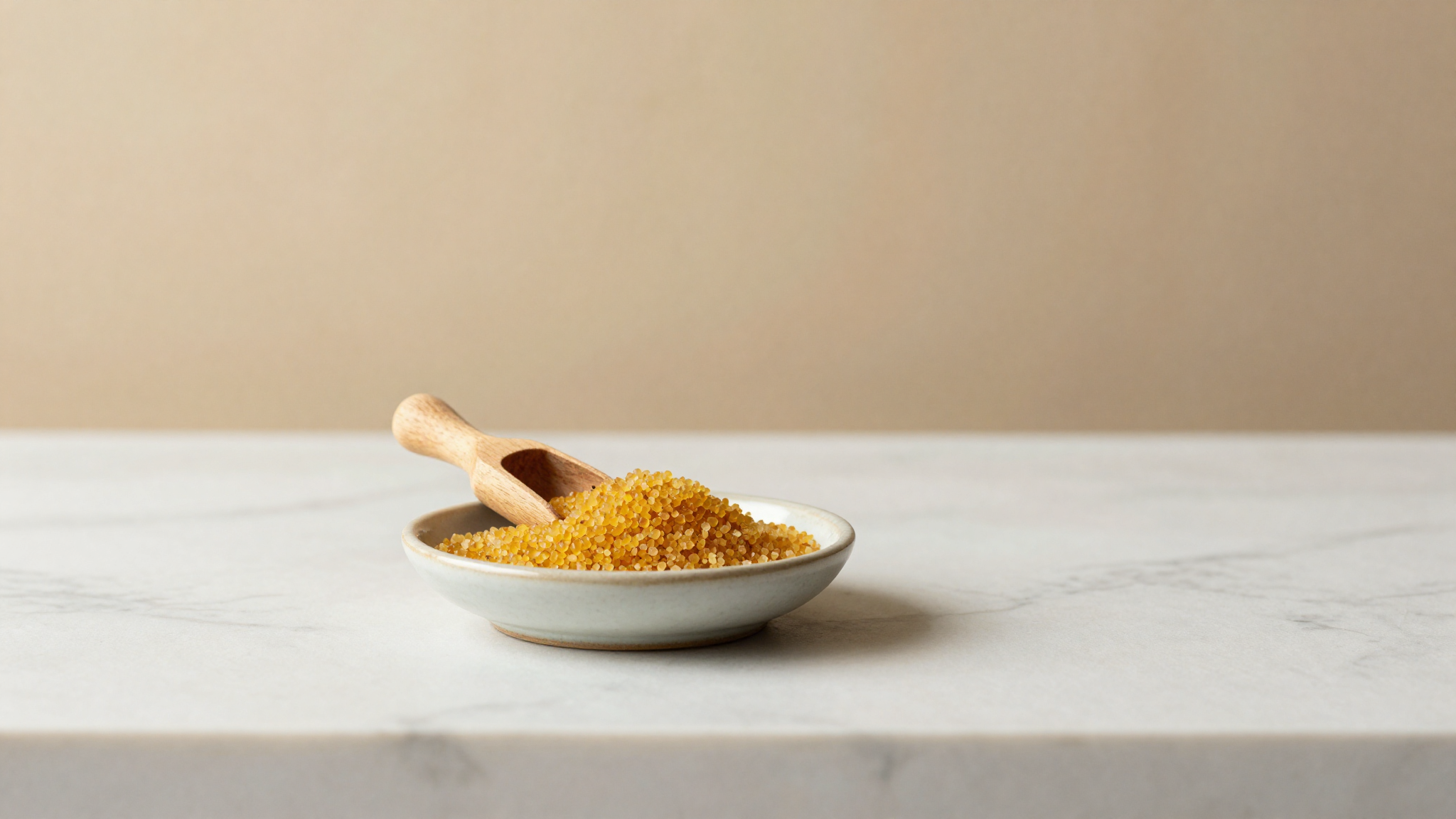
Lecithin is a phospholipid — a molecule with a water-loving head and a fat-loving tail, the classic structure of an emulsifier. Soy lecithin (E322) is extracted from soybean oil during the refining process. Sold as granules, powder, or liquid (the liquid is darker and more odorous; the powder/granules are bleached for neutral flavor).
In gelato, soy lecithin serves the same function as the lecithin naturally present in egg yolks, making it the standard emulsifier for white-base recipes (fior di latte, fruit gelato, vegan applications) where eggs aren't used.
How Lecithin Works in Gelato
During mantecazione, air is incorporated into the mix as small bubbles. For these bubbles to remain stable through freezing and storage, they need to be coated with a protein-fat film — the more uniform the film, the smaller and more stable the bubbles.
Lecithin's role: it sits at the interface between fat globules and water, helping fat distribute evenly around the air bubbles. Without enough emulsifier:
- Fat clumps and migrates
- Air bubbles collapse and merge
- Overrun drops
- Texture becomes coarse
With proper lecithin dose: smooth fat distribution, stable air cells, consistent overrun, dry texture.
Recommended Doses
| Recipe type | Soy lecithin dose | g per 1000 g |
|---|---|---|
| White base gelato | 0.10–0.20% | 1.0–2.0 |
| Vegan gelato (no dairy fat) | 0.20–0.30% | 2.0–3.0 |
| Sorbet (low fat) | 0.05–0.10% | 0.5–1.0 |
| Yellow base (already has yolk lecithin) | 0 | — |
Above 0.30% in dairy gelato: a slightly nutty/bitter off-note becomes detectable. Especially noticeable in delicate flavors like fior di latte or vanilla.
Quick reference. Soy lecithin: 0.10–0.30% of mix weight. Replaces yolk lecithin in white-base recipes. Most commercial neutro blends already include it — read the label.
Why Lecithin Matters Even in Modern Stabilizer Blends
Many artisan gelaterias use a neutro (pre-blended stabilizer + emulsifier mix) and don't think about emulsifier separately. But the neutro market splits into two categories:
1. Stabilizer-only blends. Just gums (LBG, guar, carrageenan). No emulsifier. You need to add lecithin separately if making white-base recipes.
2. Stabilizer + emulsifier blends. Gums + mono/diglycerides and/or lecithin pre-mixed. Most common type. Use 0.30–0.50% of total blend weight.
Read your neutro spec sheet to know which type you have. If unsure, look at the dosage instruction — pure stabilizer blends use 0.10–0.20%, combined blends use 0.30–0.50%.
How to Add Soy Lecithin
Powdered/granulated lecithin: pre-blend with sucrose (5:1 sugar:lecithin) and add to the mix at room temperature. Hydrates during pasteurization.
Liquid lecithin: disperse in the warm cream phase before combining with the rest of the mix. Liquid form is more potent per gram but harder to handle precisely.
Sourcing
| Source | Price (EUR/kg) |
|---|---|
| Standard food-grade soy lecithin (granules) | €10–18 |
| Sunflower lecithin (allergen-free alternative) | €15–25 |
| Liquid lecithin (industrial) | €6–12 |
Sunflower lecithin is rising in popularity because it avoids the soy allergen labeling requirement — useful for products marketed as allergen-friendly. Functionally identical to soy lecithin in gelato applications.
Related Concepts
- Egg yolks — natural source of lecithin in yellow-base recipes
- Mono/diglycerides — synthetic emulsifier alternative
- Mantecazione — the process where emulsifiers do their job
- Overrun — what emulsifiers help stabilize
Test how emulsifier dose affects perceived body and overrun in the free balancing calculator — emulsifier choice is often more impactful than people realize.
Run these numbers live
Open the free balancer and adjust ingredients as you read.