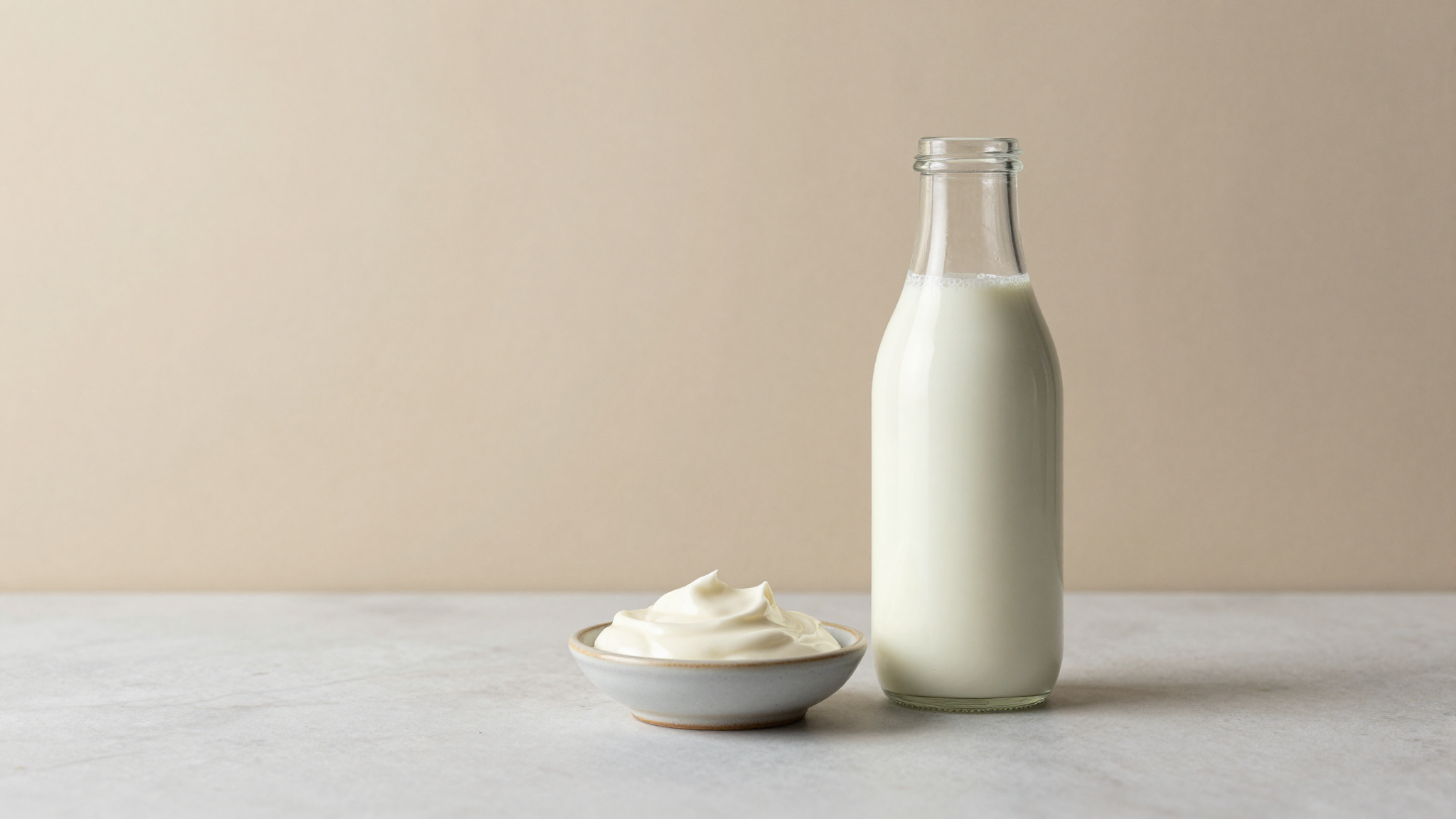
Whole milk is the structural backbone of any dairy gelato — the largest single ingredient by weight (typically 50–65% of the mix) and the source of most of the MSNF, lactose, and roughly half the fat. Standard composition: 3.5% fat, 4.7% lactose, 3.3% protein, 0.7% minerals, 87.8% water. Fresh pasteurized whole milk is the professional choice; UHT milk has denatured proteins that whip air poorly and produce slightly flat texture.
Composition of Whole Milk
A typical 1000 g of fresh cow's whole milk contains:
| Component | Weight (g) | % of milk |
|---|---|---|
| Water | 878 | 87.8% |
| Fat (butterfat) | 35 | 3.5% |
| Lactose | 47 | 4.7% |
| Protein (casein 80% + whey 20%) | 33 | 3.3% |
| Minerals (calcium, phosphorus, etc.) | 7 | 0.7% |
| Total Solids | 122 | 12.2% |
| MSNF (excluding fat) | 87 | 8.7% |
Variation: composition shifts slightly by region, breed, season, and feed. Northern European milk averages 3.8% fat in winter; Mediterranean milk 3.4% in summer. For balancing, the 3.5% / 4.7% / 3.3% ratios are the consensus reference values.
Why Fresh, Not UHT
Three reasons pros use fresh pasteurized milk over UHT:
1. Protein integrity. UHT (Ultra-High Temperature, 135°C × 2 sec) heats milk hot enough to denature whey proteins and partially denature casein. Denatured proteins emulsify fat poorly and whip air poorly during mantecazione. The result: lower overrun, less stable air cells, slightly flat mouthfeel.
2. Flavor. UHT introduces a faint cooked-milk note that some palates detect in finished gelato — particularly in delicate recipes like fior di latte where milk character is the entire flavor.
3. Lower-heat pasteurization options. Fresh pasteurized milk gives you the option of low-temperature pasteurization (65°C × 30 min) for premium recipes. UHT milk is already so heat-treated that any further pasteurization adds stress without benefit.
Quick reference. Whole milk: 3.5% fat, 4.7% lactose, 8.5% MSNF, 12.5% Total Solids. Use fresh pasteurized (HTST). Avoid UHT for premium recipes.
How Much Whole Milk in a Recipe
In a typical 1000 g gelato mix:
| Recipe type | Whole milk (g) | % of mix |
|---|---|---|
| Fior di latte | 580–620 | 58–62% |
| Pistacchio | 530–570 | 53–57% |
| Cioccolato fondente | 560–600 | 56–60% |
| Crema all'uovo (yellow base) | 520–560 | 52–56% |
The remaining 38–48% of the mix is split among cream (10–15%), sugars (15–20%), SMP (4–7%), flavoring paste (5–10%), egg yolks if used (5–10%), and stabilizer (0.3–0.5%).
Buying Guide and Quality Checks
Look for:
- HTST pasteurization (also called "high-temperature short-time", 72°C × 15 sec). Standard fresh milk in most countries.
- Fat content stated on label. Should be 3.5–3.6% — anything labeled "reduced fat" or "semi-skim" (1.5–2%) requires recalculating your recipe.
- Recent date. Use within 5–7 days of pasteurization for best emulsion.
- No homogenization avoidance — homogenization is fine for gelato; non-homogenized "cream-top" milk is fine but adds extra step (recombine before use).
Avoid:
- UHT milk
- Milk powder reconstituted from skim ("recombined" or "filled" milk)
- Flavored or enriched milk products
Related Concepts
- MSNF (Milk Solids Non-Fat)
- Lactose
- Heavy cream (panna)
- Skim milk powder (SMP)
- A2 milk
- Complete professional gelato guide
Calculate with your specific milk. The Free Gelato Balancing App lets you input the exact fat and MSNF percentages from your supplier's spec sheet. Recipe accuracy starts with accurate ingredient data.
Run these numbers live
Open the free balancer and adjust ingredients as you read.