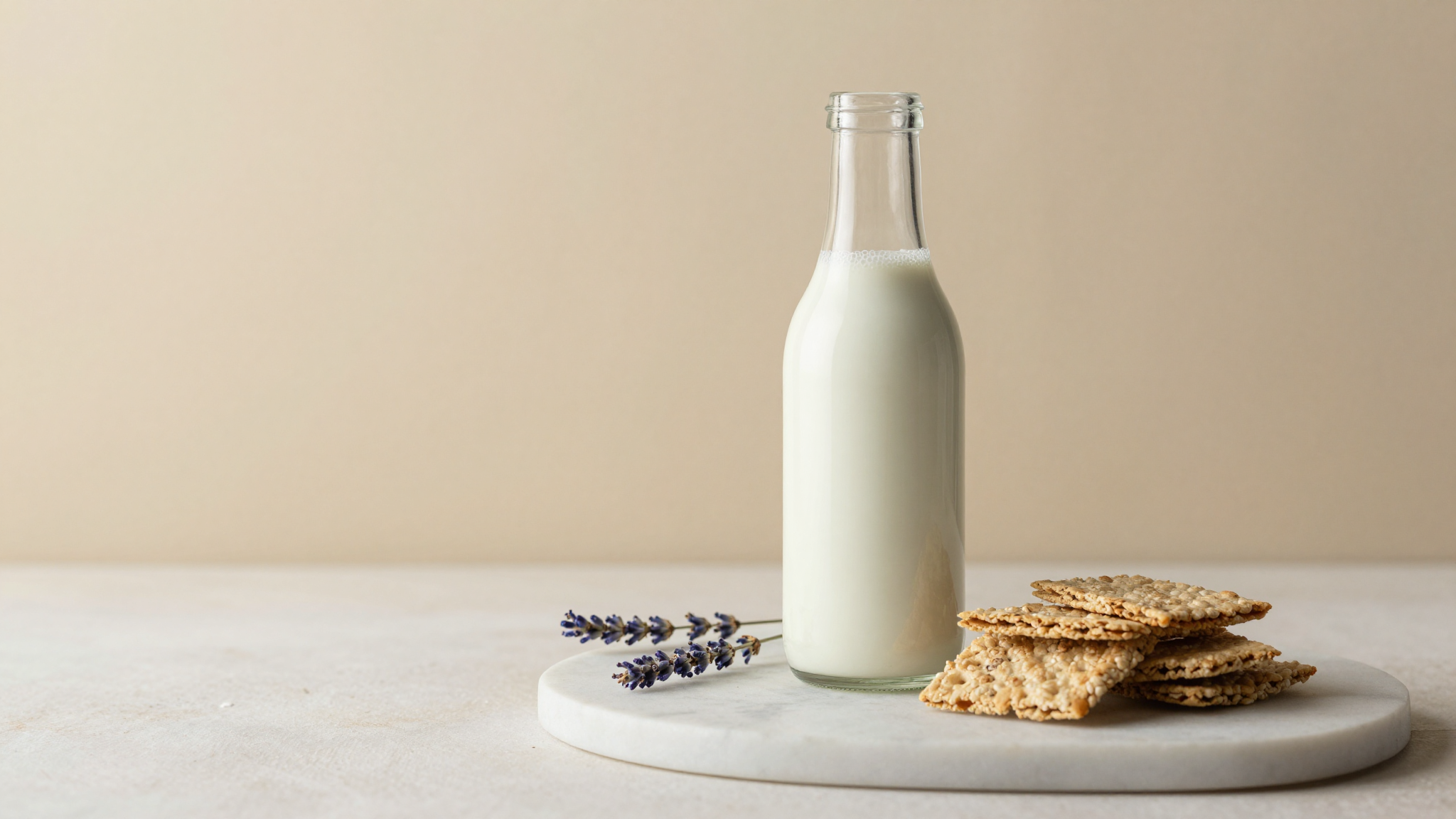
A2 milk is regular cow's milk from cows that produce only A2 beta-casein protein (no A1 variant). Same fat, lactose, MSNF, and Total Solids as standard milk — the only difference is the protein structure. From a balancing perspective: identical. The reason some gelaterias use it is perceived flavor (slightly cleaner, less "barn note") and a small but growing customer segment that, according to some research, may prefer A2 for perceived digestive benefits. Standard composition: 3.5% fat, 4.7% lactose, 8.5% MSNF, 12.5% Total Solids — same as whole milk.
What A2 Milk Is
Cows produce two main variants of the beta-casein protein: A1 and A2. Most modern dairy cows produce a mix of both. Some breeds (Guernsey, Jersey, certain Holstein lineages) and some specifically-bred herds produce only A2.
A1 vs A2 chemistry: the two proteins differ by a single amino acid at position 67 (histidine in A1, proline in A2). When digested, A1 releases a peptide called BCM-7 that some research links to digestive discomfort in sensitive individuals. A2 does not release BCM-7.
In food-science terms: A2 milk and A1 milk are chemically nearly identical for cooking and balancing purposes. The protein behaves the same way during pasteurization, emulsifies fat the same way during churning, builds the same MSNF structure.
Same Composition, Different Casein
| Property | Standard milk | A2 milk |
|---|---|---|
| Fat | 3.5% | 3.5% |
| Lactose | 4.7% | 4.7% |
| Protein (total) | 3.3% | 3.3% |
| MSNF | 8.5% | 8.5% |
| Total Solids | 12.5% | 12.5% |
| Casein A1 | varies | 0% |
| Casein A2 | varies | ~3.0% (all the casein) |
For a gelato recipe, you can swap standard whole milk for A2 milk gram for gram with no recipe rebalancing. PAC, POD, MSNF, fat — all stay identical.
Quick reference. A2 milk: same numerical profile as standard whole milk. Substitute 1:1 in any recipe. The differences are in flavor perception and digestive marketing, not in balancing.
Does It Matter for Gelato?
Flavor: Some gelataios report a subtly "cleaner" or "less barn-y" taste in A2-based fior di latte. The effect is real but mild — most customers can't blind-distinguish A2 from regular in a finished gelato. In dairy-forward recipes (fior di latte, crema all'uovo) it's slightly more noticeable; in flavored recipes (chocolate, pistachio) the flavor masks the milk character entirely.
Marketing: A2-positioned products appeal to a small but growing segment — mostly health-conscious consumers and some lactose-sensitive individuals (note: A2 is NOT lactose-free; the lactose content is the same as regular milk).
Cost: A2 milk typically costs 30–60% more than standard whole milk. Justifiable for premium fior di latte or A2-marketed lines; harder to justify for chocolate or fruit gelato where the flavor difference is undetectable.
When to Use A2 Milk
| Use case | A2 worth it? |
|---|---|
| Fior di latte (dairy-forward) | Yes if A2-positioning matters |
| Crema all'uovo (yellow base) | Marginal — flavor difference subtle |
| Cioccolato fondente | No — flavor masked by chocolate |
| Pistacchio | No — flavor masked by paste |
| Sorbetto | N/A — sorbets are dairy-free |
| Premium A2-branded line | Yes — entire pricing strategy |
Related Concepts
- Whole milk — same numerical profile
- Buffalo milk — different option for premium recipes
- MSNF, lactose
- Complete professional gelato guide
Same math, different milk. Open the Free Gelato Balancing App and swap whole milk for A2 milk in any recipe — all parameters stay locked. The choice is about flavor and positioning, not balance.
Run these numbers live
Open the free balancer and adjust ingredients as you read.