
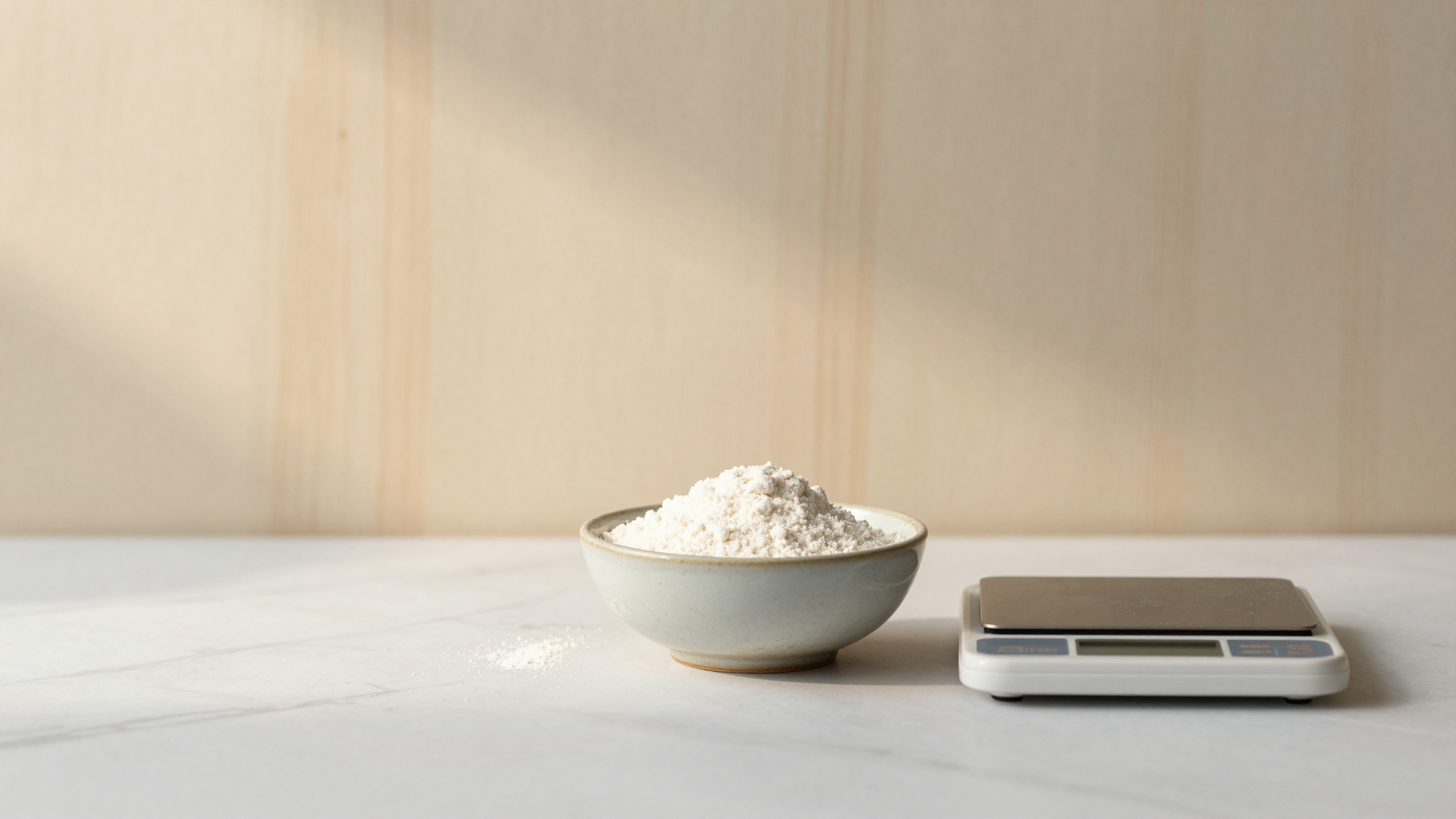
Maltodextrin is the pre-sugar end of the starch-hydrolysis spectrum — DE 19 or below, almost entirely long-chain dextrins. PAC 0, POD ~10. It is the gelataio's tool for raising Total Solids without adding sweetness or freezing-point depression. Used mostly in low-sugar gelato lines, vegan formulations missing dairy solids, and recipes where the body feels thin but PAC/POD are already at target.
What Maltodextrin Is
Maltodextrin is starch (corn, wheat, tapioca, potato) that has been hydrolyzed only slightly — DE 3 to DE 19 typically. The result is a mixture of dextrins (chains of 4 to 20+ glucose units) plus small amounts of free glucose and maltose.
Sold as a fine white powder. Tasteless or barely sweet. Dissolves cleanly in water. Approved as a food additive in essentially every regulatory framework worldwide. Cheap (~€2–4/kg).
In ice cream and gelato, maltodextrin is officially a sugar but functionally a bulk solid. Its near-zero sweetness and near-zero PAC make it useful precisely where you want neither.
The Pure-Bulk Role
Most sugars trade sweetness for PAC or vice versa. Maltodextrin trades nothing — adds only bulk:
| Property | Maltodextrin DE19 |
|---|---|
| PAC | 0 |
| POD | 10 (barely sweet) |
| Total Solids | 95% (slight moisture) |
| Effect on freezing point | Negligible |
| Effect on perceived sweetness | Negligible |
| Effect on body and viscosity | Significant |
That last row is the whole point: maltodextrin adds body, viscosity, and Total Solids to a recipe without affecting any of the other balancing parameters. It is the only common ingredient that does this cleanly.
Quick reference. Maltodextrin: PAC 0 · POD 10 · TS 95% · price ~€2–4/kg. Use 20–60 g per kg of mix to raise Total Solids without affecting PAC or POD.
Use Cases in Gelato
1. Low-sugar / diabetic-friendly recipes. When you reduce sucrose to lower POD, your Total Solids drops too. Add maltodextrin to bring TS back into the 36–42% range without re-adding sweetness or affecting PAC.
2. Vegan gelato without dairy MSNF. Removing dairy means losing the 8–12% MSNF that contributes significantly to Total Solids and body. Maltodextrin (often combined with inulin) replaces some of that body.
3. Sorbets needing more body. Some fruit sorbets feel thin or watery — adding 30–50 g of maltodextrin per kg adds substance without changing sweetness or freezing-point depression.
4. Rebalancing mistakes. Made a recipe with PAC and POD on target but Total Solids too low? Maltodextrin fixes it without breaking the other parameters. The "correction sugar."
How Much to Use
| Recipe type | Maltodextrin (g per 1000 g mix) | Reason |
|---|---|---|
| Low-sugar fior di latte | 30–50 g | Replace TS lost from reduced sucrose |
| Vegan gelato | 30–60 g | Replace MSNF body |
| Thin sorbet | 20–40 g | Add body without sweetness |
| Standard pro gelato | 0–20 g | Optional small adjustment |
Above 60 g per kg, the texture starts feeling slightly mealy or "papery" — fine for some applications, undesirable for delicate flavors.
Related Concepts
- Total Solids — what maltodextrin raises
- Glucose syrup — DE 38+ relative
- Inulin — alternative bulker with fiber benefits
- PAC, POD
- Complete professional gelato guide
Fix Total Solids without breaking balance. Open the Free Gelato Balancing App, find a recipe with low TS, add 40 g of maltodextrin — see Total Solids climb 4 points while PAC, POD and MSNF stay locked.
Run these numbers live
Open the free balancer and adjust ingredients as you read.