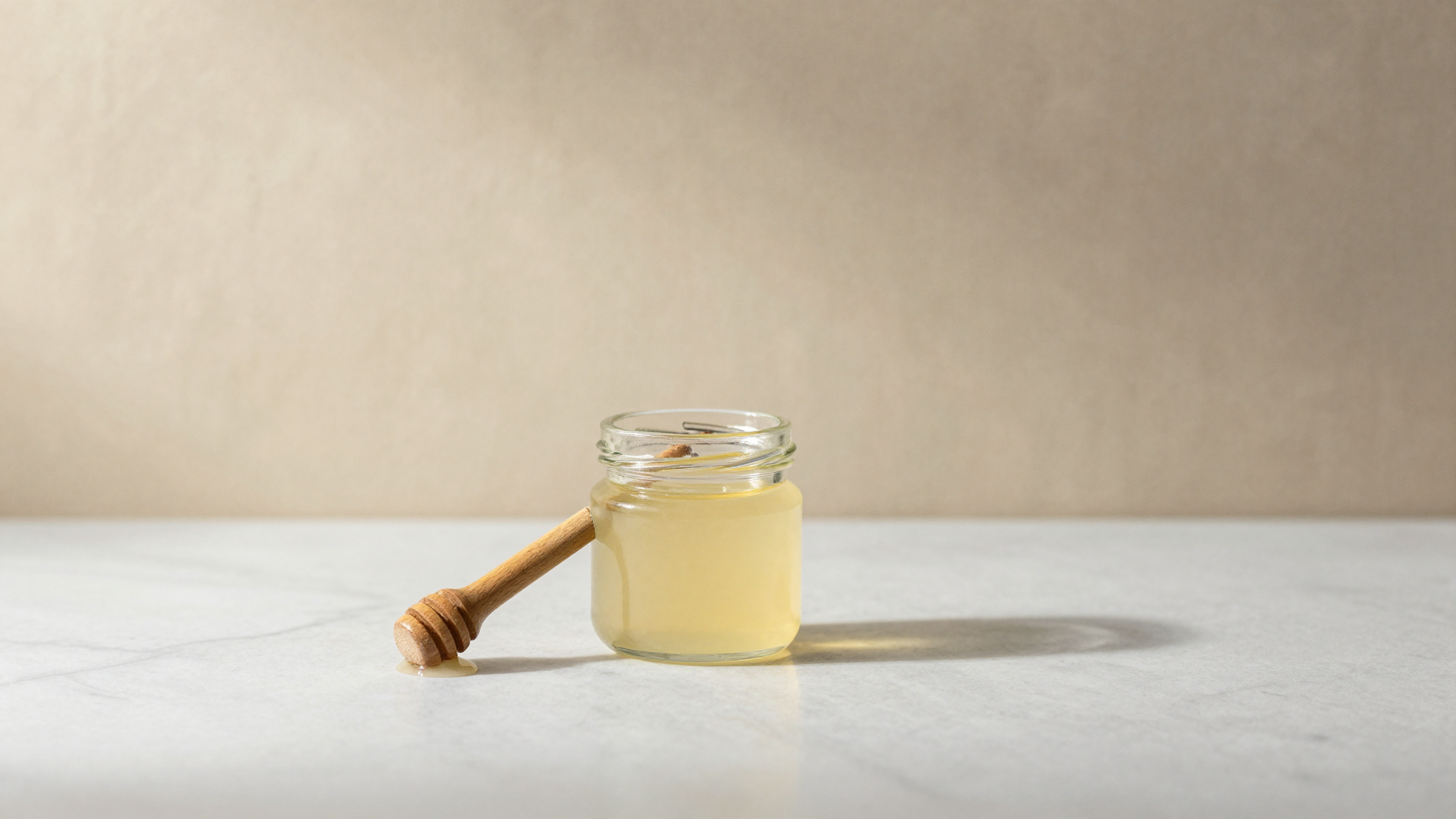
Glucose syrup is a thick, viscous liquid produced by partially hydrolyzing starch — a mixture of glucose, maltose, and longer-chain saccharides. Two common grades in gelato: DE38 (PAC 67, POD 50) and DE60 (PAC 119, POD 65). It is rarely the dominant sugar in artisan recipes, but it shines as a "body builder" — adding viscosity and chewiness without overwhelming sweetness, useful in chocolate gelato, gianduia, and some sorbet styles.
What Glucose Syrup Is
Glucose syrup is what you get when you partially hydrolyze starch (typically corn or wheat). The hydrolysis breaks the long starch chains into shorter fragments — some all the way down to free glucose, others remaining as maltose (2 glucose units), maltotriose (3 units), and longer dextrins.
The product is a mixture, not a single sugar. The composition varies depending on how far the hydrolysis went. Dextrose Equivalent (DE) is the standard measure: it tells you what percentage of the starch has been converted to free reducing sugars (mostly glucose).
Pure crystalline dextrose has DE 100. Unmodified starch has DE 0. Glucose syrup falls in between.
Understanding DE (Dextrose Equivalent)
| Product | DE | PAC | POD | Use |
|---|---|---|---|---|
| Maltodextrin | 19 | 0 | 10 | Bulk only, almost no sweetness or PAC |
| Glucose syrup DE38 | 38 | 67 | 50 | Body builder, low sweetness |
| Glucose syrup DE42 | 42 | 75 | 52 | Common American confectionery grade |
| Glucose syrup DE60 | 60 | 119 | 65 | Balanced sweetness + PAC |
| High-DE glucose syrup | 75–95 | 150–180 | 70–80 | Closer to dextrose behavior |
| Pure dextrose | 100 | 190 | 75 | Maximum PAC, low sweetness |
Higher DE = more free glucose = higher PAC and POD, less viscosity (thinner syrup). Lower DE = more long-chain dextrins = lower PAC and POD, higher viscosity (thicker syrup, more body).
DE38 vs DE60 — When to Use Each
DE38 (sometimes labeled "low conversion"): 67 PAC, 50 POD. Adds significant body and chewiness without much sweetness or freezing-point depression. Use in:
- Chocolate gelato (helps with the smooth, dense texture pros want)
- Gianduia and chocolate-hazelnut blends
- Recipes where you want to bump up Total Solids without raising PAC much
DE60 (medium conversion): 119 PAC, 65 POD. Closer to a balanced "regular" sweetener with moderate PAC. Use in:
- Sorbet bases where you want some PAC contribution without the strong PAC of dextrose
- Recipes that need a softer texture without going to pure dextrose
Quick reference. DE38 = body builder (low PAC, low POD, high viscosity). DE60 = mild sweetener with moderate PAC. Neither is a primary sweetener — both are accent sugars used at 30–80 g per kg of mix.
How Much to Use
Typical proportions in a 1000 g mix:
| Recipe type | Glucose syrup | DE grade | Role |
|---|---|---|---|
| Cioccolato fondente | 50–80 g | DE38 | Body builder for dense chocolate |
| Gianduia | 60–90 g | DE38 | Smooth, chewy gianduia mouthfeel |
| Standard fior di latte | 0–30 g | DE38 (optional) | Slight body boost |
| Sorbetto fruta | 40–60 g | DE60 | PAC contribution + slight body |
| Vegan gelato | 30–50 g | DE38 | Replace some MSNF body that's missing |
Above 100 g per kg, the texture starts feeling chewy or "gummy" — fine for some chocolate applications, can clash with delicate flavors. Glucose syrup is dense (~80% solids in liquid form), so account for the water content (~20%) when calculating Total Solids.
Related Concepts
- Dextrose — pure glucose, DE 100
- Maltodextrin — DE 19, almost no sweetness
- PAC, POD
- Complete professional gelato guide
Test the body effect. Add 60 g of DE38 glucose syrup to your chocolate gelato base in the Free Gelato Balancing App — Total Solids climbs ~5 points, PAC moves only 4. The math behind dense chocolate gelato.
Run these numbers live
Open the free balancer and adjust ingredients as you read.