
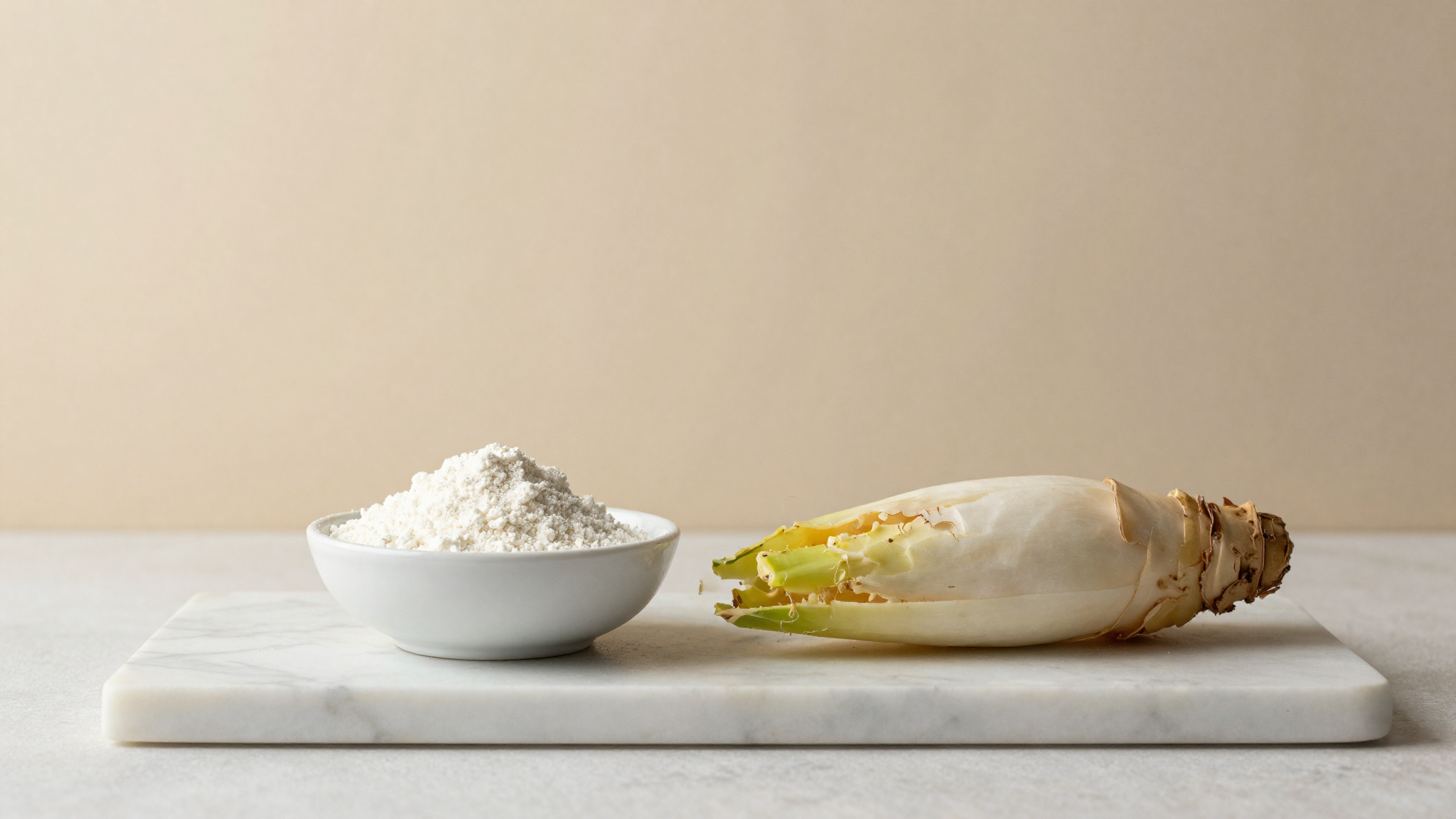
Inulin is a soluble dietary fiber from chicory root (mostly) — a fructan polymer with PAC 0, POD 0. It adds creaminess, body, and Total Solids to gelato without contributing sugar, sweetness, fat, or freezing-point depression. The professional tool for vegan gelato, low-sugar lines, and anywhere you need to mimic the mouthfeel of fat or dairy MSNF without the actual fat or dairy. Bonus: fiber content is a labeling win in many markets.
What Inulin Is
Inulin is a naturally occurring fructan — a chain of fructose units bonded together (typically 10 to 60 units long), ending in a glucose. Found in chicory root (the main commercial source), Jerusalem artichoke, agave, garlic, onions, and many other plants. Concentrated commercially by extraction from chicory roots, then dried into a fine white powder.
Chemically a carbohydrate, but humans don't have the enzymes to break it down — so it passes through the small intestine intact and ferments in the colon. That makes it a soluble dietary fiber by both definition and practice.
In a gelato mix, inulin dissolves like sugar but behaves like fat: adds viscosity, creates a creamy mouthfeel, and increases Total Solids. The molecular size is too large to contribute meaningfully to freezing-point depression, so PAC is essentially zero.
Why Pros Use Inulin
1. Mimics fat without being fat. Inulin's mouthfeel signature is closer to fat than to sugar. In low-fat or fat-free recipes, 4–6% inulin replaces some of the creaminess that the missing fat would have provided.
2. Mimics MSNF without dairy. In vegan gelato, inulin (often combined with maltodextrin and small amounts of starch) replaces the Total Solids and body that dairy MSNF would have contributed.
3. Raises Total Solids without sugar. When reducing sucrose for low-sugar lines, inulin fills the TS gap without adding sweetness or PAC.
4. Health and labeling appeal. Inulin counts as dietary fiber on most labels. A 4–6% inulin gelato can claim "good source of fiber" in many markets — useful marketing for health-positioned products.
Quick reference. Inulin: PAC 0 · POD 0 · TS ~95% · price ~€8–15/kg. Use 30–60 g per kg of mix for body and creaminess. Vegan and low-sugar essential.
Health and Labeling Benefits
Inulin is a prebiotic fiber — it feeds beneficial gut bacteria (Bifidobacteria especially). Documented health effects include:
- Improved gut microbiome diversity
- Modest reduction in blood glucose response when consumed with sugar
- Mild laxative effect (can cause bloating in sensitive individuals at >10 g/day)
- Counts as soluble dietary fiber on EU and US labels
For commercial labeling: a gelato containing 4 g of inulin per 100 g serving can typically claim "source of fiber" (EU regulation 1924/2006). At 6 g per serving: "high in fiber." This is real marketing leverage for health-conscious lines.
Caveat: more than 10 g of inulin per serving can cause digestive discomfort (bloating, gas) in sensitive consumers. Keep individual servings under 8 g of inulin to avoid complaints.
How Much to Use
| Recipe type | Inulin (g per 1000 g mix) | Reason |
|---|---|---|
| Standard pro gelato | 0–40 g | Optional body boost |
| Low-fat / no-fat gelato | 50–80 g | Replace fat mouthfeel |
| Vegan gelato | 40–70 g | Replace MSNF body |
| Low-sugar gelato | 40–60 g | Replace TS lost from reduced sucrose |
| Sorbets needing body | 10–20 g | Slight body boost without breaking PAC |
In our pillar Fior di Latte recipe, 41 g of inulin (4.1% of mix) raises Total Solids by ~4 points and creaminess noticeably without affecting any other parameter. That is the professional sweet spot.
Related Concepts
- Maltodextrin — alternative bulker without fiber benefits
- Total Solids, MSNF
- PAC, POD
- Vegan gelato complete guide
- Complete professional gelato guide
Add body without breaking balance. Open the Free Gelato Balancing App, drop 50 g of inulin into your recipe — see Total Solids climb 5 points while PAC, POD, MSNF and fat stay locked. The clean way to add creaminess.
Run these numbers live
Open the free balancer and adjust ingredients as you read.