Inverted sugar is sucrose that has been hydrolyzed (split) into its glucose + fructose components — a 50/50 mixture that delivers nearly twice the freezing-point depression of sucrose (PAC 190 vs 100) and 30% more sweetness (POD 130 vs 100). It is a Sicilian-tradition classic in sorbetti and a quiet workhorse in chocolate and fruit gelati where moisture retention and surface sheen matter. Common commercial form: Trimoline (the brand name has become genericized).
What Inverted Sugar Is
Sucrose is a disaccharide — one molecule of glucose bonded to one molecule of fructose. When you "invert" sucrose, you break that bond, releasing the two monosaccharides. The molar count doubles: 1 disaccharide molecule → 2 monosaccharide molecules. Since freezing-point depression depends on molar count, the PAC roughly doubles per gram (100 → 190).
Inversion happens via three routes:
- Acid + heat (lemon juice or citric acid + simmer for 30 min) — DIY method
- Enzyme (invertase enzyme at 50°C for several hours) — commercial method
- Aging at low pH (e.g., honey, naturally inverted by enzymes from bees)
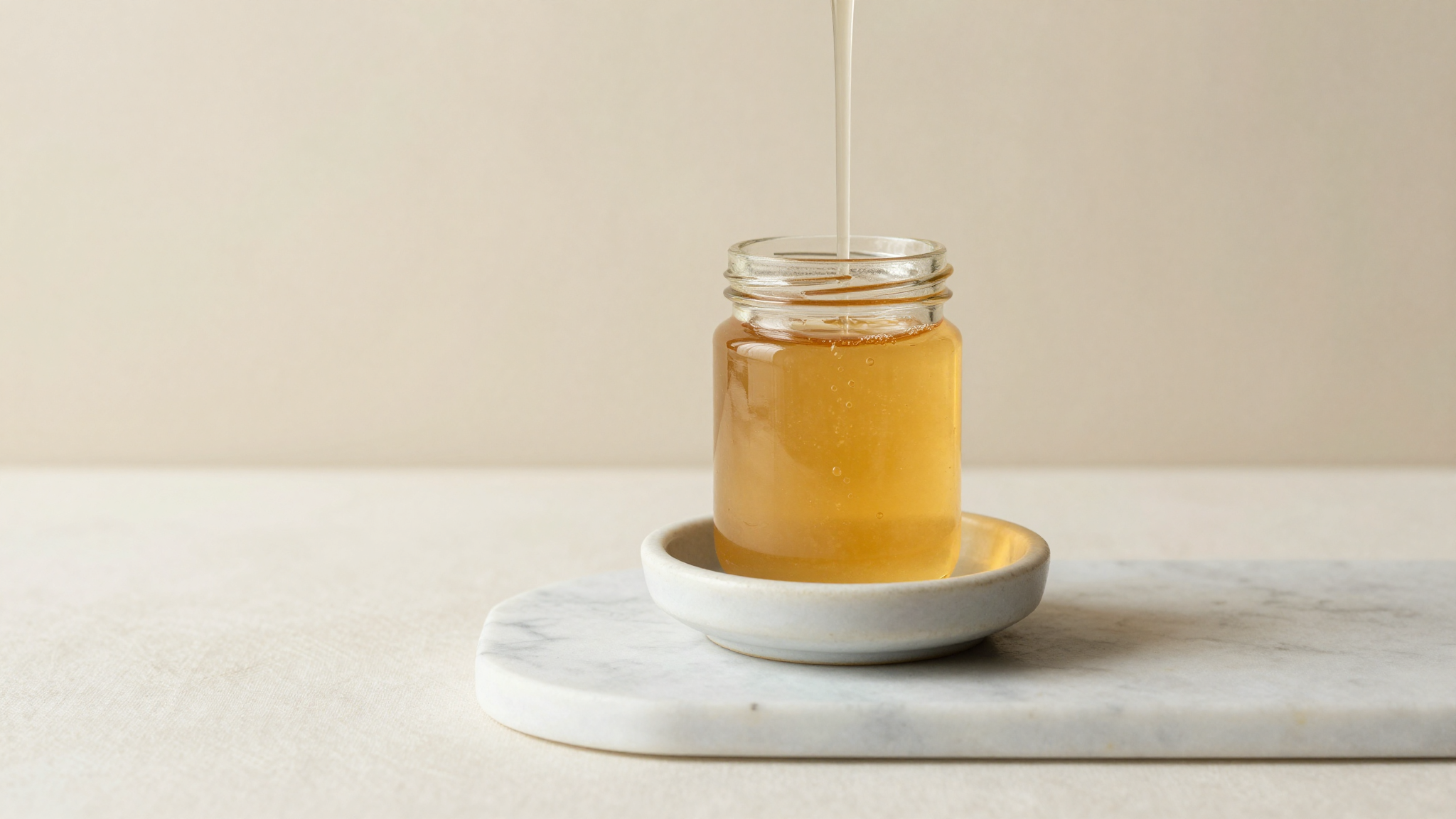
Honey is essentially natural inverted sugar — that is why it behaves similarly to Trimoline in gelato recipes.
Why Pros Add Inverted Sugar
Three benefits at typical use levels (10–30 g per 1000 g mix):
1. PAC boost without bulk solids. Each gram of inverted sugar adds the PAC equivalent of ~1.9 g of sucrose, but only 1 g of weight. Useful when you need more anti-freezing power without raising Total Solids out of range.
2. Moisture retention. Fructose (one of the two components of inverted sugar) is hygroscopic — it holds water tighter than sucrose does. The result is a slightly softer, moister mouthfeel and slower drying-out at the showcase surface.
3. Sheen and color. Inverted sugar gives gelato a subtle glossy surface and a slightly warmer color tone. Sicilian gelato traditions especially value this in lemon and pistachio recipes.
Quick reference. Inverted sugar: PAC 190 · POD 130 · TS ~75% (depends on water content of the syrup form). Use 1–3% of mix weight in gelato, 2–5% in sorbetti.
How Much to Use
In a typical 1000 g gelato mix:
| Recipe type | Inverted sugar (g) | % of mix |
|---|---|---|
| Fior di latte | 0–10 | 0–1% |
| Pistacchio | 10–20 | 1–2% |
| Cioccolato fondente | 15–25 | 1.5–2.5% |
| Sorbetto al limone | 20–30 | 2–3% |
| Sorbetto fragola | 25–35 | 2.5–3.5% |
Above 5% of mix weight, the slight molasses-like flavor of inverted sugar becomes detectable — fine for fruit sorbets, can clash with delicate flavors like fior di latte.
Trimoline vs DIY Inverted Sugar
Trimoline (and similar commercial inverted sugars: Nevulose, Lygomme, AB Mauri Tate&Lyle) is enzyme-hydrolyzed, pH-neutral, with consistent sugar profile. Comes as a thick syrup ~78% solids. Reliable for production. Price €4–8/kg.
DIY inverted sugar is made by simmering 1000 g sucrose + 400 g water + 1 g citric acid at 110°C for 20 minutes. Cool, neutralize with a pinch of sodium bicarbonate. Cheaper but variable in inversion percentage — use a refractometer to verify Brix at ~75% for consistent results.
For artisan production, buy commercial Trimoline. For experimentation or home use, DIY works.
Related Concepts
- PAC (anti-freezing power)
- POD (sweetness power)
- Sucrose, fructose — the two components when sucrose is inverted
- Sorbetto al Limone recipe — classic use case
- Complete professional gelato guide
Test the moisture retention effect. Open the Free Gelato Balancing App, add 20 g of inverted sugar to a fior di latte recipe, watch PAC jump 38 points and POD jump 26 points. The math behind the Sicilian touch.
Run these numbers live
Open the free balancer and adjust ingredients as you read.