
What CMC Is
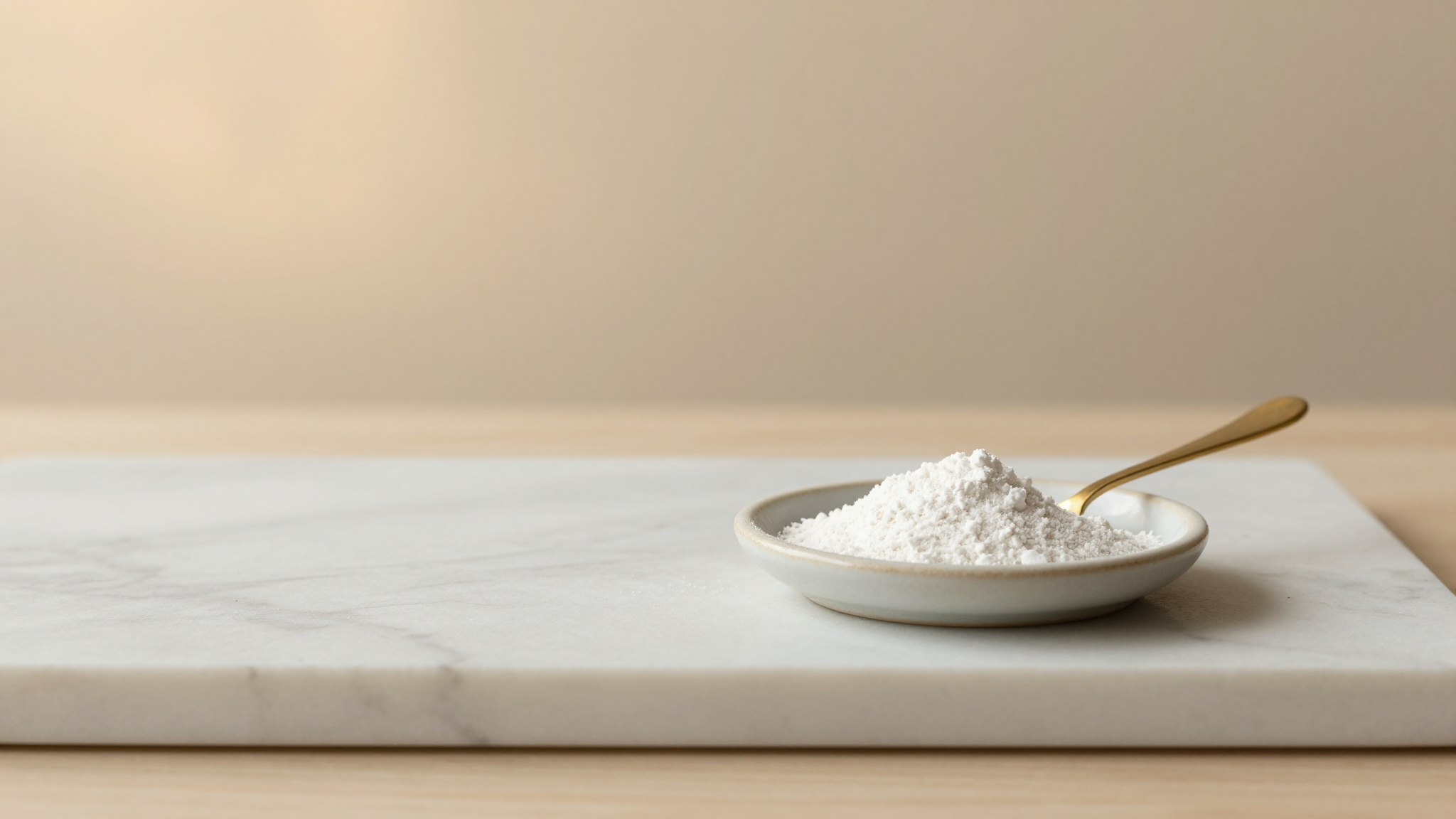
CMC — sodium carboxymethylcellulose, also called cellulose gum — is a chemically modified cellulose sold as a fine cream-colored powder. The cellulose comes from wood pulp or cotton; the modification (replacing some hydroxyl groups with carboxymethyl groups) makes it water-soluble.
In food, CMC is the workhorse stabilizer of industrial ice cream. Soft-serve mixes, supermarket ice cream, popsicles, and packaged frozen desserts almost all use CMC because:
- Very low cost (€5–10/kg)
- Hydrates fast in cold water (no heat needed)
- Predictable, consistent behavior across large batches
- Neutral flavor
When CMC Makes Sense in Artisan Gelato
CMC is less common in artisan gelato because the texture isn't as fine as you get from LBG. But it has three legitimate uses:
1. Cold-process recipes. When you can't or don't want to pasteurize, CMC works fully cold — better than LBG for these applications.
2. Vegan ice cream. CMC paired with guar produces a stable plant-milk ice cream texture without animal-derived inputs and at low cost — practical for restaurants offering vegan options.
3. Sorbets where pectin isn't desired. CMC gives sorbets body without the gel character that pectin adds. Useful for clean, frozen-soda style sorbets.
Quick reference. CMC: dose 0.10–0.25% of mix weight. Hydrates cold (works at 4°C). Best paired with guar and carrageenan in industrial-style blends.
Recommended Doses
| Use case | CMC dose (% of mix) | g per 1000 g |
|---|---|---|
| Solo (cold-process sorbet) | 0.20–0.25 | 2.0–2.5 |
| In industrial-style blend (with guar + carrageenan) | 0.10–0.15 | 1.0–1.5 |
| In vegan blend (with guar + LBG) | 0.05–0.10 | 0.5–1.0 |
Above 0.30% solo CMC: texture becomes noticeably gummy and "industrial-feeling" — fine for soft-serve, undesired in artisan applications.
How to Add CMC
The easiest of all stabilizers to handle. Pre-blend with sucrose at 5:1 sugar:CMC ratio (or just whisk into the mix while powdered — CMC rarely clumps). Add at any point in the recipe, before or after pasteurization. Hydrates within minutes at any temperature ≥4°C.
This handling simplicity is why industrial mixers love CMC.
Why Artisan Gelaterias Often Skip CMC
Three reasons:
1. Texture profile. LBG-based blends produce smoother, more "premium" texture. CMC has a slight gumminess that's perceptible in clean-flavor applications (fior di latte, lemon).
2. Story and positioning. "Made with seaweed and carob extract" sounds more artisan than "stabilized with cellulose gum." Some artisan gelaterias make a marketing point of avoiding synthetic-sounding additives.
3. Pasteurization is standard anyway. If you pasteurize (legally required in most commercial settings), the cold-process advantage of CMC disappears — you might as well use LBG.
Sourcing
| Source | Price (EUR/kg) |
|---|---|
| Standard food-grade CMC (low viscosity) | €5–10 |
| Premium ice-cream-grade CMC (high viscosity) | €10–18 |
| Pre-blended industrial neutro (with CMC) | €8–15 |
CMC is by far the cheapest hydrocolloid stabilizer. Cost per kg of gelato: under €0.02.
Related Concepts
- Guar gum — common partner in CMC-based blends
- Carrageenan — third gum in industrial blends
- Stabilizers and emulsifiers — overview category
For artisan operations, LBG-based blends are usually preferable. For industrial/commercial production at scale, CMC is the cost and consistency winner. Validate stabilizer choice in the free balancing calculator.
Run these numbers live
Open the free balancer and adjust ingredients as you read.