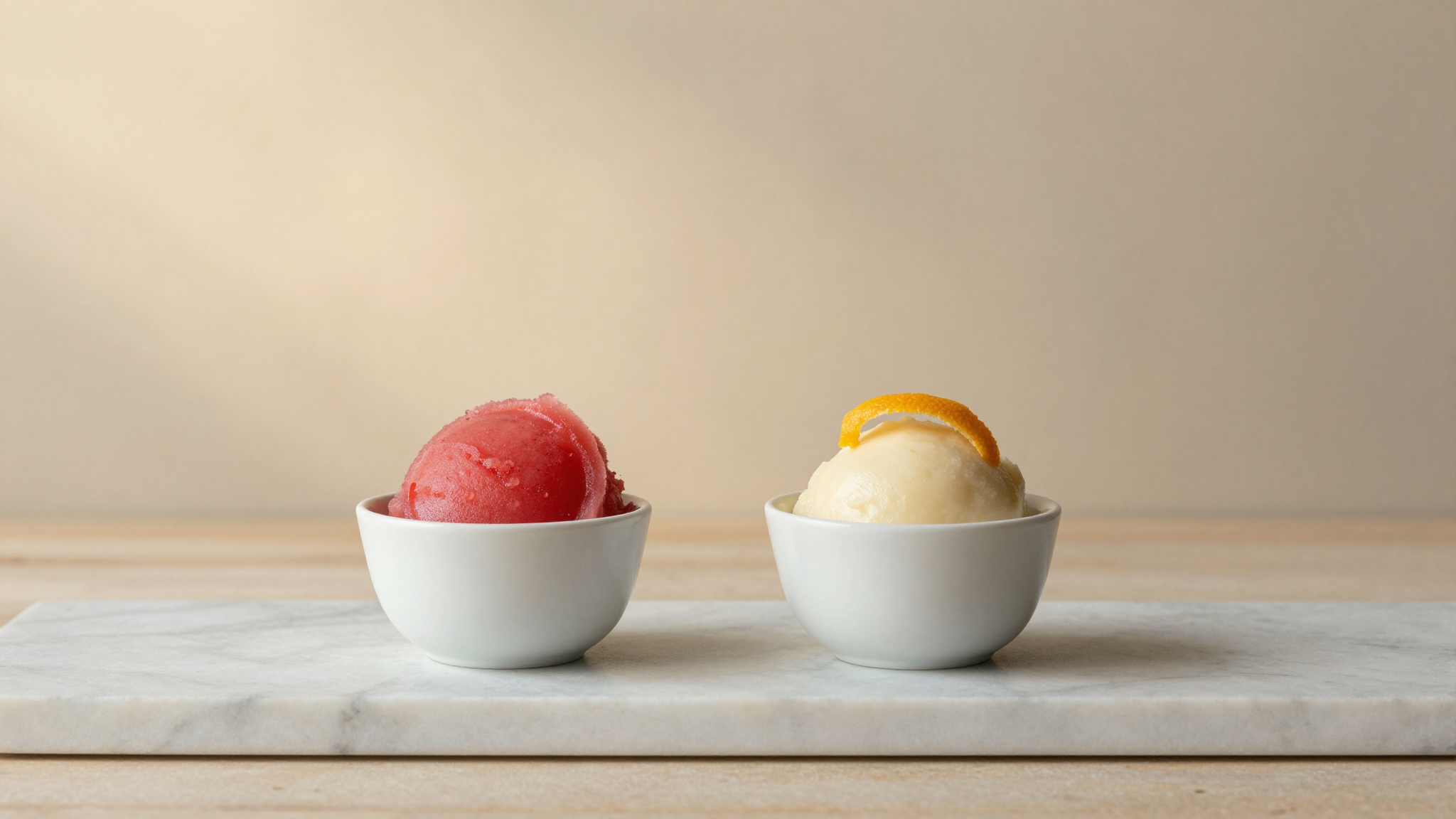
Sorbetto, sorbet, and sherbet are three different products with overlapping names — and the confusion costs gelaterias customers every day. Sorbetto is the Italian dairy-free fruit ice (0% milkfat). Sorbet is the French/English equivalent (also 0% milkfat). Sherbet is the American dairy-light category (1–2% milkfat) — technically not a sorbet at all. All three are frozen, sweetened, and fruit-based, but they balance differently and serve different audiences.
The Three Definitions
Sorbetto (Italian). Frozen dessert made from fruit purée, sugar, water, and stabilizer. Zero milkfat, zero milk solids. The Italian artisan tradition treats sorbetto as a separate discipline from gelato — different equipment cycles, different balancing targets, different shelf placement. Examples: sorbetto al limone, sorbetto alla fragola, sorbetto di mango.
Sorbet (French / English). Same product as sorbetto, different name. The word sorbet entered English from French, which got it from Italian sorbetto, which got it from Arabic sharbat (sweet drink). When you see "sorbet" on an English-language menu, expect dairy-free.
Sherbet (American). A dairy-light frozen dessert containing 1–2% milkfat (per US FDA Code of Federal Regulations 21 CFR 135.140). The presence of dairy makes it functionally distinct from sorbet/sorbetto. Texture is creamier, flavor more rounded. Examples: orange sherbet, raspberry sherbet — typical of American supermarkets.
Composition Comparison Table
| Property | Sorbetto / Sorbet | Sherbet (US) |
|---|---|---|
| Milkfat | 0% | 1–2% (legally required) |
| Milk solids non-fat | 0% | up to 5% |
| Total Solids | 28–36% | 28–36% |
| PAC (anti-freezing power) | 280–340 | 250–290 |
| POD (sweetness power) | 24–28 | 22–26 |
| Origin | Italy / France | United States |
| Texture | Pure fruit, refreshing, slight icy edge | Creamier, milder, more rounded |
| Common flavors | Lemon, strawberry, mango, raspberry | Orange, lime, raspberry, rainbow |
Quick reference. Sorbetto and sorbet = same thing, dairy-free. Sherbet = American dairy-light variant with 1–2% milkfat. If you need lactose-free, ask for sorbet/sorbetto, not sherbet.
Why Sherbet Exists (and Why Italians Don't Make It)
Sherbet emerged in early 20th-century America as a middle ground between full ice cream and sorbet. The small dose of dairy gave it more body and creaminess — properties American consumers liked — while keeping it lighter and more refreshing than ice cream. The FDA codified the category in 1932.
Italian tradition kept sorbetto pure (dairy-free) and let gelato cover the dairy/cream space. The result: in Italy you choose sorbetto OR gelato; in America you have ice cream, sherbet, AND sorbet as three separate categories.
For an Italian-style gelateria operating outside Italy: stick to sorbetto/gelato distinction. Sherbet doesn't fit the artisan Italian framework and confuses customers who expect Italian-style products.
Which One Should You Make?
Make sorbetto if you want pure fruit flavor, lactose-free option for customers, refreshing palate-cleanser style, or you're operating an Italian-style gelateria.
Make sherbet if you're operating an American-style ice cream shop where the menu category is established, OR you want a dairy product that's lighter than ice cream but creamier than sorbet.
Don't mix terminology. Calling your dairy-free product "sherbet" because it sounds friendlier to American customers will technically violate FDA labeling rules and confuses people who actually want dairy-light.
Related Concepts
- PAC (anti-freezing power)
- POD (sweetness power)
- How to balance a sorbetto recipe
- Sorbetto al Limone recipe
- Complete professional gelato guide
Balance the Italian way. Open the Free Gelato Balancing App and load a sorbetto recipe — see PAC, POD, and Total Solids hit the dairy-free targets (PAC 280–340, POD 24–28, TS 28–36%) live.
Run these numbers live
Open the free balancer and adjust ingredients as you read.